Bed Bug Bites NZ: Identification, Treatment & More
There’s something particularly unsettling about waking up with itchy red welts and not knowing what caused them — especially when the first suspicion often lands on mosquitoes or spiders rather than bed bugs, which are a real possibility in New Zealand despite the myth that Aotearoa is free of them. This guide walks through how to identify bed bug bites, what treatments actually work, and how to tell if you’re dealing with an infestation.
Bite identification: Cannot be identified from bite alone ·
Common treatment: Usually none required ·
Typical signs: Blood stains on sheets, dark spots, musty odor ·
NZ myth: New Zealand does have bed bugs despite common belief
Quick snapshot
- Look for clusters or lines of itchy red welts.
- Bites are often on exposed skin during sleep.
- Cannot confirm by bite alone; check for other signs.
- Blood spots on sheets or mattress.
- Dark fecal smears on bedding or walls.
- Musty odor and live bugs or shed skins.
- Wash with soap and water, apply anti-itch cream.
- Avoid scratching to prevent infection.
- Seek medical help if allergic reaction or infection.
- Heat treatment: steam, hot wash, or dryer.
- Insecticide sprays (check NZ approved products).
- Diatomaceous earth, essential oils as repellents.
The table below summarises core facts about bed bug bites and infestation signs.
| Factor | Details |
|---|---|
| Bite appearance | Red, itchy welts often in clusters or lines |
| Common hiding spots | Mattress seams, bed frames, furniture cracks |
| NZ prevalence | Present in all regions; myth of absence is false |
| Treatment advice | Clean bites with soap and water; anti-itch creams |
How to Identify Bed Bug Bites
What does a bed bug bite look like?
Bed bug bites appear as small, red or discolored itchy bumps. According to Harvard Health Publishing (Harvard Medical School), the marks can be random, in a straight line, or in a zigzag pattern. They are often flat or slightly raised areas that may become inflamed and blistered, as described by Orkin (pest control specialists).
The bites most commonly occur on exposed skin while sleeping — face, neck, arms, and hands — according to the NHS (UK health authority). But here’s the catch: experts agree you cannot confirm bed bugs from the bite alone, because the bites look nearly identical to mosquito, flea, or spider bites.
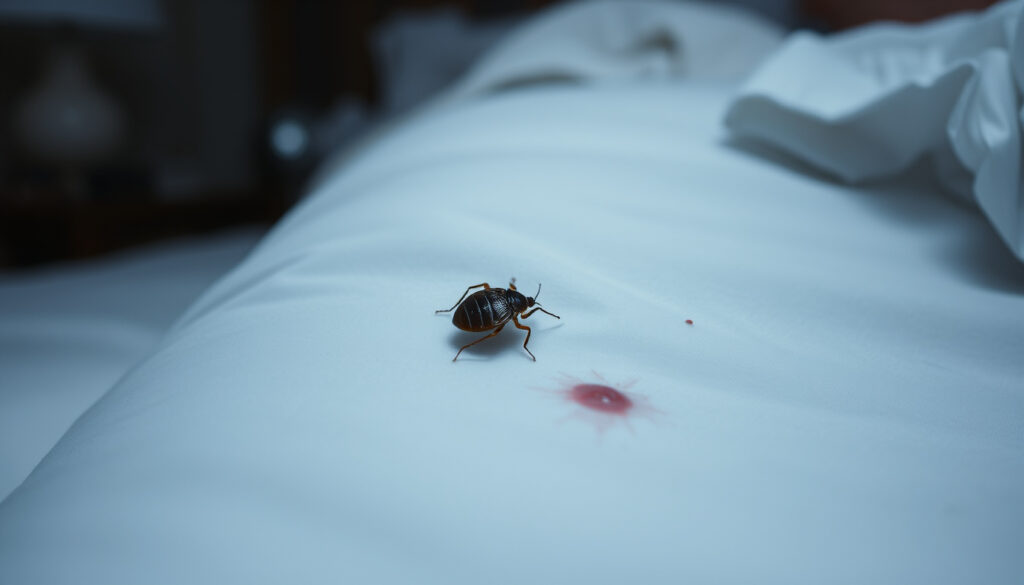
A single bite pattern cannot diagnose bed bugs. The NHS states that the main clues of an infestation are not the bites themselves — they are the physical evidence: spots of blood on bedding and small brown spots from bedbug feces.
Are 3 bites in a row always bed bugs?
Many people have heard that “breakfast, lunch, dinner” — three bites in a row — is a telltale sign of bed bugs. While bites in a line or cluster are common with bed bugs, it is not definitive. According to Healthline (health information publisher), bedbug bites can appear in lines or clusters on exposed skin, but other insects and skin conditions can produce similar patterns. The pattern alone is not a reliable diagnosis.
What is commonly mistaken for bed bug bites?
Bed bug bites are most frequently confused with mosquito bites, flea bites, and spider bites. The NHS (UK health authority) notes that many people have little to no reaction to bed bug bites, making identification even harder. A DermNet NZ (dermatology resource) explains that bed bug saliva contains antibacterial defensin and lacks venom, which is why the bites often do not have the same toxic reaction as spider bites.
If you are unsure, look for the other signs of infestation — the bites themselves are not enough.
The implication: relying on bite appearance alone leads to misdiagnosis and delayed treatment of the actual infestation.
Signs and Symptoms of a Bed Bug Infestation
What are three signs you might have bed bugs?
The Harvard Health Publishing (Harvard Medical School) recommends inspecting mattress seams and box springs for three telltale signs: small dark blood stains, blackish specks (fecal spots), and shed skins. A sweet, musty odor may also be present in heavier infestations.
- Blood stains on sheets or pillowcases
- Dark, rust-colored spots on bedding or furniture (bedbug feces)
- Musty odor, often described as sweet and unpleasant
The NHS (UK health authority) also advises checking behind the headboard, inside dresser drawers, sofas, chairs, and around luggage storage areas.
What do bed bug bites look like in New Zealand?
In New Zealand, bed bug bites look exactly the same as anywhere else: itchy red welts that appear on skin exposed during sleep. The DermNet NZ (New Zealand dermatology resource) describes them as small, red, itchy papules or wheals. Some people develop a delayed reaction, with bites appearing days after the actual feeding.
What are the symptoms of bed bug bites in New Zealand?
According to the Health NZ (New Zealand public health authority), symptoms include itchy red welts that often appear overnight. However, some people have no reaction at all. The bites are usually not dangerous, but scratching can lead to secondary skin infections.
The CDC (US public health authority) says the best way to treat a bite is to apply antiseptic creams or lotions to help with itching and avoid scratching.
The pattern: physical evidence such as blood spots and fecal smears are more reliable indicators than bite appearance.
Treatment for Bed Bug Bites in New Zealand
How are bed bug bites treated in New Zealand?
The NHS (UK health authority) says bedbug bites usually clear up on their own in about a week. For symptom relief, the NHS recommends a cool compress, keeping the area clean, and avoiding scratching to reduce itching and prevent infection. Over-the-counter corticosteroid creams, oral antihistamines, and pain relievers can reduce inflammation and itching, as noted by Healthline (health information publisher).
| Treatment type | What to use | Source |
|---|---|---|
| Cool compress | Apply for 10-15 minutes to reduce swelling | NHS |
| Antiseptic cream | Prevents infection and soothes itching | CDC |
| Corticosteroid cream | Reduces inflammation and redness | Healthline |
| Oral antihistamine | Relieves systemic itching and swelling | Healthline |
The pattern across all these recommendations: the body heals itself, and treatment focuses on symptom relief, not curing the bite itself.
What can I put on bed bug bites to stop itching?
For immediate relief, the Health NZ (New Zealand public health authority) recommends washing the area with soap and water and applying a cold compress. Calamine lotion and over-the-counter antihistamine creams are widely available at New Zealand pharmacies including Chemist Warehouse and Countdown.
When should I see a doctor for bed bug bites?
The NHS (UK health authority) advises seeing a doctor if bites are painful, swollen, or very itchy and do not improve after pharmacy treatment, or if swelling is spreading. Signs of infection include redness, warmth, pus, or red streaks. The Marlborough District Council (New Zealand local authority) adds that some people are allergic to bed bug saliva, which can lead to painful swelling requiring medical attention.
Most bed bug bites resolve without medical intervention. The risk is not the bite itself but the secondary infection from scratching, especially in children or people with compromised skin barriers.
Does New Zealand Have a Bed Bug Problem?
What country has the worst bed bug problem?
Countries with the most severe bed bug infestations include the United States, United Kingdom, Australia, Canada, and parts of Europe, according to pest control industry reports. The US EPA (environmental protection authority) notes that bed bug infestations have increased globally in recent decades, driven by international travel, pesticide resistance, and reduced use of broad-spectrum insecticides.
Why do people think New Zealand has no bed bugs?
It is a persistent myth that New Zealand is free of bed bugs. The Health NZ (New Zealand public health authority) confirms that bed bugs are present in New Zealand and have been reported in homes, hotels, and hostels across the country. The New Zealand Herald (national news outlet) has reported on the persistence of this myth, which may stem from New Zealand’s strict biosecurity laws — but those laws do not eliminate bed bugs entirely.
New Zealand does have bed bugs. They are not a sign of poor hygiene and can affect any home or accommodation. Believing otherwise delays treatment and allows infestations to spread.
What this means: the myth of a bed bug-free New Zealand is dangerous because it discourages early detection and intervention.
How to Get Rid of Bed Bugs in New Zealand
What kills bed bugs instantly?
Heat kills bed bugs instantly. The NHS (UK health authority) recommends washing affected bedding and clothing on a hot wash at 60°C and tumble drying on a hot setting for at least 30 minutes. Harvard Health Publishing (Harvard Medical School) also recommends vacuuming suitcases or using a garment steamer to kill any bed bugs or eggs on luggage.
What smells do bedbugs hate?
Bed bugs are repelled by strong scents including lavender, tea tree, peppermint, and eucalyptus essential oils. While these may act as a deterrent, the US EPA (environmental protection authority) does not recommend essential oils as a primary treatment method — they are not proven to eliminate infestations.
What bed bug sprays are available in New Zealand?
Several products are available in New Zealand, including Kiwicare No Bed Bugs spray and powder, insecticide sprays from brands like Mortein and Raid, and diatomaceous earth powder. The New Zealand EPA (environmental protection authority) regulates these products — always check the label for approval and follow instructions carefully.
The US EPA (environmental protection authority) recommends a six-step DIY process: identify the problem, develop a plan, keep the infestation from expanding, prepare for treatment, kill the bed bugs, and evaluate and prevent.
Steps to eliminate bed bugs in New Zealand
- Identify and confirm: Find physical evidence — blood spots, fecal stains, or live bugs. Consult the DermNet NZ (dermatology resource) for visual confirmation.
- Isolate and contain: Seal infested bedding and clothing in plastic bags. Wash on a hot cycle (60°C) or freeze for 3-4 days as recommended by the NHS (UK health authority).
- Vacuum thoroughly: Vacuum mattress seams, bed frames, baseboards, and furniture cracks. Dispose of the vacuum bag immediately in sealed plastic.
- Apply treatment: Use an approved insecticide spray or diatomaceous earth powder. Follow label instructions from the New Zealand EPA (environmental protection authority).
- Steam and heat: Use a garment steamer on mattresses and furniture to kill eggs and adults on contact, as recommended by Harvard Health Publishing (Harvard Medical School).
- Monitor and repeat: Bed bugs can survive weeks without feeding. The US EPA (environmental protection authority) warns that treatment can take weeks to months.
The Marlborough District Council (New Zealand local authority) advises that severe infestations may require professional pest control services, which typically cost between $200 and $800 depending on the property size and infestation severity.
Confirmed Facts and What’s Unclear
Confirmed facts
What’s unclear
- Whether three bites in a row always indicate bed bugs — not definitive; other insects and skin conditions can cause similar patterns.
- Instant kill claims for some insecticide sprays depend on direct contact and environmental conditions, according to the US EPA.
- Whether essential oils effectively eliminate infestations — not proven as a primary treatment.
- Whether professional pest control is always necessary for severe infestations — depends on severity and ability to execute DIY methods.
Expert Perspectives on Bed Bug Bites
“Bed bug bites lack venom and their saliva has antibacterial defensin.”
“Bed bug bites are not usually dangerous; avoid scratching to prevent infection.”
“Some people are allergic to bed bug saliva, leading to painful swelling that may require medical treatment.”
— Marlborough District Council (New Zealand local authority)
“The best way to treat a bite is to apply antiseptic creams or lotions to help with itching and avoid scratching.”
For a thorough inspection routine, see our guide on how to check for bed bugs to catch an infestation early.
Frequently asked questions
Can bed bugs transmit diseases?
No. According to the CDC (US public health authority), bed bugs are not known to transmit diseases to humans. The primary health concern is the itching and potential secondary infection from scratching.
How long do bed bug bites last?
Bed bug bites typically heal on their own within 1 to 2 weeks, according to Healthline (health information publisher). The NHS (UK health authority) says most clear up in about a week.
Do bed bugs only bite at night?
Bed bugs are primarily nocturnal and feed on sleeping humans. However, they can adapt to feed during the day if they are hungry and the host is inactive, according to the US EPA (environmental protection authority).
Can you see bed bugs with the naked eye?
Yes. Adult bed bugs are about the size of an apple seed — 5-7 mm long — and visible to the naked eye. They are reddish-brown, oval, and flat. The NHS (UK health authority) says you can check mattress seams and furniture crevices for live bugs.
Should I see a doctor for bed bug bites?
See a doctor if bites are painful, swollen, or very itchy and do not improve after pharmacy treatment, or if signs of infection appear (redness, pus, red streaks), according to the NHS (UK health authority).
How to prevent bed bugs while traveling in New Zealand?
Harvard Health Publishing (Harvard Medical School) recommends inspecting hotel mattresses and headboards, keeping luggage off the floor, and using a garment steamer on clothes after returning home.
Are bed bug bites worse for some people?
Yes. Some people have no reaction at all, while others develop severe allergic reactions with painful swelling and intense itching, according to the Marlborough District Council (New Zealand local authority).
Related reading
- Harbour View Motel Napier: Reviews, Prices, Phone & More
- House Movers North Shore: Costs, Red Flags & Moving Day Guide
- Health NZ: Bed bugs information
- DermNet NZ: Bed bug infestation
For New Zealanders dealing with bed bug bites, the choice is clear: focus on identifying the physical evidence of infestation rather than trying to diagnose from bites alone, and act quickly with heat treatment and approved products. The alternative — waiting to see if the problem resolves on its own — can turn a minor nuisance into a costly and prolonged infestation that affects sleep quality, mental health, and even your home’s value.
More related posts
 Don’t Stop Believin’ by Journey: Original Singer, Story, Legacy
 Seek Jobs Palmerston North: Compare Top Job Sites
 How to Use a Prezzy Card: Activation & Checkout Guide
 NZ Dollar to Indian Rupee: Live Rate & Conversion Guide (2026)
 Galaxy Watch 8 Classic: Worth It? Specs, Price, and Comparison
 Who Called Me From This Number Auckland? Find Out
 Tolaga Bay Area School: Profile, Principal, Reviews & ERO Report