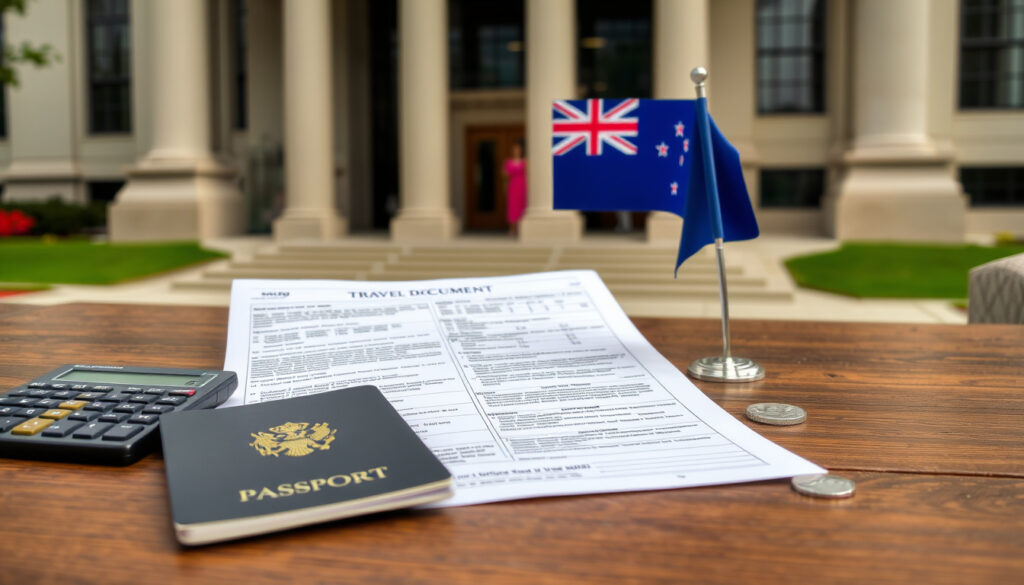
NZ Super Pension Rules 2025 Changes & Overseas Guide
New Zealand’s retirement landscape just got a major tenant: the residence requirement for NZ Super is now on a 16-year climb from 10 to 20 years, a shift that began on 1 July 2024. Here’s how the changing rules affect eligibility, payments, and the ability to collect your pension while living overseas.
Current weekly rate (single, living alone): NZD $1,038.02 after tax (April 2024) ·
Residence requirement: 10 years, increasing to 20 by 2042 ·
Eligible age: 65 (unchanged) ·
Next rate review: April 2025
Quick snapshot
- Age 65 or older (Work and Income, New Zealand’s social welfare agency)
- Residence: 10 years (increasing to 20 by 2042) (Retirement Commission Te Ara Ahunga Ora)
- NZ citizen or permanent resident (Work and Income)
- Single living alone: $1,038.02 (Sorted.org.nz, Commission for Financial Capability)
- Single sharing: $956.82 (Sorted.org.nz)
- Couple (both qualify): $796.76 each (Sorted.org.nz)
- Up to 26 weeks temporary absence without impact (Sorted.org.nz)
- Longer stays possible with social security agreements (New Zealand Government portal)
- Apply before leaving NZ (Work and Income)
- Residence criteria tightening continues (from July 2024) (Retirement Commission Te Ara Ahunga Ora)
- Annual rate adjustment in April 2025 (Sorted.org.nz)
- No change to retirement age (Work and Income)
Six key facts summarise the current rules, one pattern: the residence path is gradually lengthening.
| Fact | Value |
|---|---|
| Age of eligibility | 65 |
| Residence years needed (current) | 10 |
| Residence years needed (by 2042) | 20 |
| Maximum overseas payment (temporary) | 26 weeks |
| Next scheduled rate change | April 2025 |
| Source for rates | Sorted.org.nz (April 2024 figures) |
The pattern: the table confirms a decade-long transition toward a stricter residency threshold.
Can I live overseas and still get NZ superannuation?
Portability rules for short and long stays
- Absences under 26 weeks are generally fine (Sorted.org.nz, Commission for Financial Capability).
- If you move permanently or stay longer than 26 weeks, the amount may be reduced depending on the country (Sorted.org.nz).
- You must meet the residence criteria even if you later live abroad (Work and Income, New Zealand’s social welfare agency).
Payments can stop entirely if you move to a non-agreement country without prior approval. The portability formula often used is 1/45th of the full rate for each year lived in New Zealand between ages 20 and 65, according to analysis by Smiths Law, a New Zealand legal firm.
The 26-week grace window is for temporary absences only. If you plan a permanent move, check the list of countries with social security agreements first as failure to do so could halt your pension.
The implication: a permanent move without a social security agreement is a high-stakes gamble with your retirement income.
Countries with social security agreements
- Payments can continue beyond 52 weeks to certain countries with agreements (New Zealand Government portal).
- Special portability rules apply for Pacific Island countries – you must be entitled before leaving and intend to live there for more than 52 weeks (Work and Income).
Application process for overseas payment
- Apply before you depart New Zealand (Work and Income).
- You must be ordinarily resident in NZ, the Cook Islands, Niue, or Tokelau at the time of application (Work and Income).
Planning ahead is essential. Without approval, your payments stop and you may need to reapply on return.
How much is NZ pension per week?
Current after-tax rates for single and couple
- Single living alone: NZD $1,038.02 per week after tax (Sorted.org.nz, Commission for Financial Capability).
- Single sharing: NZD $956.82 (Sorted.org.nz).
- Couple (both qualify): NZD $796.76 each (Sorted.org.nz).
How rates are adjusted annually
- Rates are reviewed each April in line with the Consumer Price Index (Sorted.org.nz).
- Historical increases have typically been 2–4% per year.
Comparison with previous years
- In April 2023 the single living-alone rate was approximately NZD $1,000 after tax – the 2024 figure is about 3.8% higher.
The annual CPI adjustment keeps pace with inflation, but retirees relying solely on NZ Super should budget for modest increases, not windfalls.
What this means: if you’re single and living alone, NZ Super currently provides just over NZD $1,000 a week – a baseline that covers basic living costs in most regions but may leave little for extras.
Is NZ retirement age changing?
Current retirement age at 65
- Eligibility age is 65, with no pending legislation to change it (Work and Income, New Zealand’s social welfare agency).
- The Retirement Commission Te Ara Ahunga Ora confirms the age requirement is 65 (Retirement Commission Te Ara Ahunga Ora).
Proposals to raise the age in future
- Some reports suggest future governments may consider raising the age, but no formal proposal is in place.
- The 2023 review by the Retirement Commissioner did not recommend an immediate increase.
Global context of retirement age increases
- Several countries are raising their retirement age: the UK is moving to 67 by 2028, Australia to 67 by 2023 (and considering 70) (New Zealand Government portal).
- New Zealand has not followed suit – the age remains 65 as of 2025.
While the official age is steady for now, the tightening residence requirement acts as a de facto eligibility barrier for later-life migrants.
Why this matters: New Zealand is an outlier among developed nations in keeping the age at 65. Any future change would likely be phased in over decades, giving current retirees little cause for immediate concern.
How long can you be out of NZ before you lose your superannuation?
Absence rules for temporary travel
- Up to 26 weeks (6 months) temporary absence without losing eligibility, if you intend to return (Sorted.org.nz, Commission for Financial Capability).
- No requirement to notify if under 26 weeks, but it’s wise to inform Work and Income.
Permanent relocation and portability
- Permanent move: payment can continue indefinitely only to countries with a social security agreement (New Zealand Government portal).
- Without an agreement, payments may stop after 26 weeks and you may need to reapply upon return.
Requalification after losing entitlement
- If payments stop, you must reapply once back in New Zealand and meet the residence criteria again (Work and Income, New Zealand’s social welfare agency).
The trade-off: the 26-week rule offers flexibility for extended holidays, but permanent relocators face a binary choice – move to a covered country or lose the pension.
Is NZ pension going up in 2026?
Scheduled annual adjustments
- Rates are adjusted each April based on CPI data from the previous year (Sorted.org.nz, Commission for Financial Capability).
- The 2026 increase will depend on CPI figures released in late 2025.
Projected increase based on inflation
- Assuming inflation around 2.5–3%, the after-tax rate for a single living alone could rise to approximately NZD $1,065–$1,070 per week.
Government announcements on future rates
- No official 2026 figure has been announced; only estimates are available.
- Historical increases have typically been 2–4% per year.
The April 2025 adjustment will set the baseline for 2026 discussions. Retirees should treat any projections as ballpark figures until the official CPI data is released.
The pattern: NZ Super rises with inflation, not by political discretion. That protects purchasing power but means no real-terms windfalls.
Timeline: NZ Super rule changes
- – New residence criteria take effect: people turning 65 after this date face a phased 20-year requirement (Retirement Commission Te Ara Ahunga Ora).
- – Annual NZ Super rate adjustment based on CPI; exact increase confirmed in March 2025.
- – Next annual rate change; possible continued increase.
- – Full 20-year residence requirement in effect for all new applicants (Retirement Commission Te Ara Ahunga Ora).
The pattern: the phase-in is gradual, but by 2042 every new applicant will need two decades of residence – a major shift from today’s 10-year rule.
Clarity section
Confirmed facts
- Residence requirement for new applicants started increasing from 10 years to 20 years from 1 July 2024 (Retirement Commission Te Ara Ahunga Ora).
- Current weekly rates as of April 2024: single living alone $1,038.02 after tax (Sorted.org.nz, Commission for Financial Capability).
- Eligibility age remains 65 with no pending legislation to change it (Work and Income, New Zealand’s social welfare agency).
What’s unclear
- Exact percentage increase for April 2025 – depends on CPI figures not yet released.
- Whether the retirement age will ever be raised – debated but no formal proposal.
- Future changes to portability rules for overseas payments.
Quotes from official sources
“The new residence criteria for NZ Super affect people turning 65 from 1 July 2024.”
– Work and Income New Zealand (official site)
“Single living alone $1,038.02 per week after tax.”
– Sorted.org.nz (Commission for Financial Capability)
“In New Zealand to be eligible for NZ Super you need to be at least 65 years of age.”
– Retirement Commission Te Ara Ahunga Ora
For New Zealanders nearing retirement, the choice is clear: plan your residency timeline carefully, or risk losing access to the pension you’ve counted on. The 20-year residence requirement will catch many who move overseas mid-career. Those already living abroad should secure their portability status now, while the 26-week window still offers a safety net. The pattern: proactive planning, not passive reliance, defines success under the new rules.
lifetimes.co.nz, msd.govt.nz, sriahobilamuttmysore.in, nzpensionabuse.org.s3-website-us-east-1.amazonaws.com, assets.retirement.govt.nz
Frequently asked questions
How do I apply for NZ Super if I am already living overseas?
You must apply through Work and Income before leaving New Zealand, or if already overseas, contact the nearest NZ embassy or consulate for guidance.
Does NZ Super get taxed when paid abroad?
NZ Super is generally taxed in New Zealand. If you live in a country with a double-taxation agreement, the tax treatment may differ – check with Inland Revenue.
Can I receive NZ Super if I have a private pension or savings?
Yes, NZ Super is not means-tested. You can receive it alongside private pensions, KiwiSaver, or other savings.
What is the difference between NZ Super and the Veteran’s Pension?
The Veteran’s Pension is for those who have qualifying New Zealand defence service. It has similar rates but different eligibility criteria.
Do I need to have worked in New Zealand to get NZ Super?
No, NZ Super is based on residence, not work history. You do not need to have paid into a scheme – it is a universal pension.
How long does it take to process a NZ Super application?
Work and Income aims to process applications within 20 working days, but it can take longer if documents are missing.
Are NZ Super payments affected by moving to Australia?
Yes, but a social security agreement allows continued payment if you meet the criteria. You may need to claim Australian Age Pension as well – rules vary.
What happens to NZ Super if I return to New Zealand after living overseas?
If you still meet the residence criteria, payments resume. If you lost entitlement due to extended absence, you may need to reapply.
More related posts
 New Balance 860 Sale 2025: Best Deals & Buying Guide
 Hot Water Beach Tides: Best Time to Dig & 50/90 Rule Guide
 Chemist Warehouse Te Rapa: Hours, Online Shopping & Owners
 Robert Galbraith Books in Order: Complete Series List
 2 Degrees Monthly Mobile Plans: Cheapest & Spark Comparison
 Game of Thrones Characters: Main Cast, Houses & Popularity
 Gas Bottle Refill Near Me: Prices, Locations & Comparison
 BAE Systems Share Price: Live Chart, Forecast & Analysis