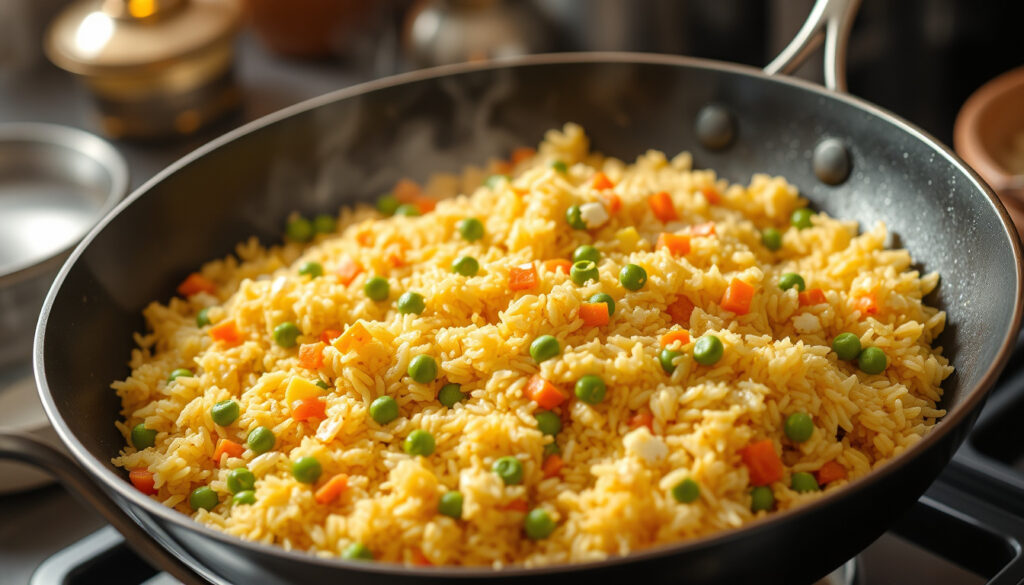
Egg Fried Rice Recipe – Perfect Non-Sticky Results
Egg fried rice stands as one of the most satisfying weeknight meals you can prepare in under fifteen minutes. The dish transforms simple ingredients into a flavourful, restaurant-quality meal using cold leftover rice, beaten eggs, and a handful of aromatics. When executed properly, each grain stays separate and lightly toasted, delivering that signature fluffy texture rather than the mushy, clumped results many home cooks struggle with.
The technique behind great egg fried rice relies on three fundamental principles: starting with day-old rice that has dried out in the refrigerator, maintaining extremely high heat throughout cooking, and understanding precisely when to introduce the eggs. These elements work together to create the characteristic smoky flavour and perfect texture that distinguishes professional-style fried rice from improvised stovetop attempts. Whether you are feeding a family of four or meal-prepping for the week ahead, mastering this recipe opens doors to countless variations you can adapt to whatever ingredients you have on hand.
This guide walks through every stage of preparation, from selecting the right rice to adding final seasoning touches, ensuring you achieve consistent results each time you step into the kitchen. The method accommodates beginners while offering insights that even experienced home cooks will appreciate.
What Ingredients Are Needed for Egg Fried Rice?
Gathering the correct ingredients forms the foundation of any successful fried rice dish. The component list remains straightforward, requiring items most households keep stocked regularly, yet the quality and preparation state of each ingredient significantly influence the final outcome.
10 mins
10 mins
4
Easy
The core ingredients centre around cold, day-old white rice prepared using long-grain or jasmine varieties. You will need approximately 250 to 400 grams of cooked rice that has been refrigerated overnight, allowing excess moisture to evaporate from the grains. Freshly cooked rice contains excess steam and moisture that causes sticking during the high-heat frying process, making the overnight rest non-negotiable for professional results.
Key Insights for Success
- Cold rice prevents the mushy, clumped texture that plagues most home versions of this dish
- Free-range eggs deliver superior flavour compared to standard supermarket varieties
- Neutral oils with high smoke points, such as vegetable or peanut oil, withstand the intense heat required
- Sesame oil added at the end provides aromatic depth without burning
- Spring onions contribute freshness when added both during cooking and as a final garnish
- Soy sauce introduces umami complexity; tamari serves as a direct gluten-free substitute
- Garlic, while optional, creates a fragrant base layer that enhances overall flavour perception
| Ingredient | Amount | Notes |
|---|---|---|
| Cold cooked white rice | 250-400g | Day-old or refrigerated overnight |
| Eggs, beaten | 2-4 medium | Free-range for best taste |
| Neutral oil | 1-2 tbsp | Vegetable or peanut oil |
| Soy sauce | 1-2 tbsp | Light or dark; tamari for gluten-free |
| Sesame oil | 1 tbsp | Add at the end for aroma |
| Spring onions | 2 stalks | White and green parts separated |
| Garlic | 1-2 cloves | Optional but recommended |
| Salt, white pepper | To taste | Base seasoning |
Optional additions include oyster sauce for depth, lemon juice for brightness, and various vegetables or proteins you can incorporate based on preference. Those following specific dietary requirements will find vegan adaptations straightforward by substituting tofu scramble for eggs and adding extra vegetables like peas or carrots.
What Is the Best Rice for Egg Fried Rice and How to Prep It?
The rice selection determines approximately eighty percent of your final result, making this choice the most critical decision in the entire preparation process. Long-grain white rice varieties, particularly jasmine rice, produce the best outcomes due to their lower starch content compared to short-grain alternatives.
Why Fresh Rice Will Not Work
Freshly cooked rice contains abundant moisture trapped within each grain, which releases steam during cooking. When you attempt to fry rice immediately after cooking, the grains collide with each other and create a sticky, matted result rather than the individual, fluffy grains you desire. The steaming quality that makes freshly cooked rice pleasant for eating directly contradicts what you need for successful stir-frying.
The solution involves preparing rice at least one day before you intend to cook it, or purchasing rice specifically for this purpose and refrigerating it overnight. Even microwave rice packets from the supermarket can work if you allow them to chill thoroughly before frying.
Refrigerating cooked rice overnight serves multiple purposes beyond simply cooling the grains. The cold temperature causes the starches to recrystallize and the surface moisture to evaporate, creating drier grains that separate easily during high-heat cooking. Loosen the grains with chopsticks or a fork before adding them to the wok to break up any clumps.
Preparing Rice the Night Before
Cook your rice as normal, using slightly less water than usual to achieve a firmer texture. Spread the hot rice on a large baking tray or shallow dish to accelerate cooling, then cover and refrigerate for a minimum of twelve hours. This additional step ensures complete moisture removal and prevents any bacterial growth during storage.
When ready to cook, remove the rice from the refrigerator and allow it to come to room temperature for five to ten minutes. This brief resting period makes the grains more pliable and easier to break apart before frying. Use your hands, chopsticks, or a fork to separate each grain individually, eliminating any compacted sections that would cook unevenly.
Do You Cook the Egg First or Last in Fried Rice?
The timing of egg introduction represents one of the most debated aspects of fried rice technique, with professional chefs and home cooks holding strong opinions on both approaches. Understanding the rationale behind each method allows you to make informed decisions based on your preferences and equipment.
The Traditional Two-Pan Method
The conventional approach involves cooking the eggs first, creating a separate batch of scrambled eggs that you set aside before frying the rice. Once the rice reaches the desired texture and temperature, you reintroduce the pre-cooked eggs and toss everything together. This technique guarantees distinct, tender egg pieces throughout the dish and provides complete control over the egg’s consistency.
To execute this method properly, heat your wok until it begins to smoke, add approximately one tablespoon of oil, then pour in your beaten eggs. Allow the eggs to set for approximately forty-five seconds without stirring, then scramble them into small, bite-sized pieces. Remove the eggs immediately and reserve them while you proceed with the rice and aromatics.
Professional chefs recommend cooking eggs until they are just set, with a slightly underdone centre still appearing slightly glossy. These undercooked bits will continue cooking from residual heat and when combined with the hot rice, resulting in creamy, custard-like egg pieces distributed throughout every serving. Eggs that are fully set before removal tend to become rubbery during the final mixing stage.
The One-Pan Well Method for Beginners
An alternative technique favoured by beginners involves pushing the fried rice to the sides of the wok, creating a well in the centre where you cook the eggs directly before folding them into the rice. This approach reduces equipment needs, shortens cleanup time, and works well for simpler preparations where distinct egg pieces are less important than overall convenience.
Both methods produce satisfying results, so your choice depends primarily on your visual preferences and whether you value the precise control offered by the two-pan technique. Restaurant kitchens typically use the traditional method because it allows better assessment of egg doneness and creates a more visually appealing presentation with clearly defined egg and rice components.
How Do You Make Egg Fried Rice Not Sticky?
Achieving non-sticky fried rice ranks among the most common challenges home cooks face, yet the solution requires understanding just a few interconnected factors. The primary culprits include insufficient rice drying, inadequate heat levels, and excessive liquid ingredients that introduce moisture during cooking.
Temperature Control Fundamentals
Your home stove likely cannot replicate the intense BTU output of commercial restaurant burners, but you can maximize performance by allowing adequate preheating time and using appropriate cookware. A carbon steel wok provides superior heat distribution compared to flat-bottomed alternatives, primarily because the thin metal heats quickly and transfers energy efficiently across its curved surface.
Heat your empty wok for sixty to ninety seconds before adding any ingredients, watching for wisps of smoke that indicate sufficient temperature. Only at this temperature will the rice sizzle immediately upon contact, creating the surface char and distinct texture that characterizes professional results. Adding ingredients to an inadequately heated wok guarantees sticking and a steamed rather than fried final product.
Never use a lid during frying as this traps steam and moisture, directly causing the sticky texture you are trying to avoid. Similarly, resist the temptation to add more oil thinking it will prevent sticking; excess oil coats the grains and creates a greasy rather than fluffy result. Finally, avoid crowding the wok with too much rice at once, as this drops the temperature significantly and causes uneven cooking.
The Complete Anti-Stick Protocol
Begin with thoroughly chilled, dry rice as your foundation. Heat your wok until smoking, then add oil in two separate additions rather than all at once. The first addition coats the wok surface for the initial egg cooking, while the second coats the rice grains during the main frying phase. Work in batches if preparing more than three cups of rice to prevent overcrowding.
Keep the total frying time short, approximately two to three minutes of active cooking after adding rice, with no single ingredient spending excessive time in the wok. Continuous movement using a wide spatula or wok ladle keeps grains separated and prevents any section from cooling below the critical threshold needed for proper caramelization.
How Long Does Egg Fried Rice Take and Is It Healthy?
The complete preparation time for egg fried rice spans approximately twenty minutes from start to finish, including both the optional overnight rice preparation and the active cooking phase. The actual hands-on cooking requires only ten to twelve minutes once ingredients are measured and ready.
- Rice refrigeration (if starting from fresh): Cook rice, spread to cool, refrigerate overnight
- Wok preheating: Heat empty wok for sixty to ninety seconds until smoking
- Egg cooking: Thirty to forty-five seconds for initial scramble
- Aromatic cooking: Thirty to sixty seconds for garlic and spring onions
- Rice frying: Two to three minutes of active stir-frying over highest heat
- Seasoning and combining: Sixty to ninety seconds for final tossing
- Immediate service: Serve right away while piping hot
From a nutritional perspective, a standard serving of egg fried rice provides approximately 400 to 550 calories, with the majority derived from carbohydrate content in the rice. Protein contributions from eggs range between twelve and eighteen grams per serving, while fat content sits around fifteen to twenty grams when using moderate oil quantities.
| Nutrient | Per Serving | Notes |
|---|---|---|
| Calories | 400-550 kcal | 20-28% daily value |
| Carbohydrates | 60-70g | Predominantly from rice |
| Protein | 12-18g | Primarily from eggs |
| Fat | 15-20g | From oils and egg yolks |
| Sodium | 800-1200mg | Varies significantly by sauce amount |
| Fiber | 1-2g | Minimal unless vegetables added |
Those seeking lower-calorie versions can reduce oil quantities, increase vegetable content, and limit soy sauce additions. The dish provides a reasonably balanced macronutrient profile when paired with a light soup or salad, though individuals monitoring carbohydrate intake should be mindful of portion sizes given the rice-dominant nature of the recipe.
How to Store Leftover Egg Fried Rice?
Proper storage practices maintain both food safety and quality when dealing with leftover fried rice. The dish contains cooked eggs, which require specific temperature handling to prevent bacterial growth that could cause foodborne illness.
Properly Established Methods
- Refrigerate within two hours of cooking
- Store in airtight containers
- Consume within forty-eight hours
- Reheat to piping hot (165°F minimum)
- Use a hot wok for best texture restoration
Elements Requiring Attention
- Microwave reheating compromises texture significantly
- Freezing causes grain texture deterioration upon thawing
- Extended storage beyond two days risks bacterial proliferation
- Adding fresh vegetables during storage may introduce excess moisture
The preferred reheating method involves using a hot wok rather than a microwave oven. This approach restores the crispy, slightly charred texture of fresh fried rice by bringing the grains back to high temperature quickly. Microwaving, while convenient, tends to make rice rubbery and often leaves cold spots that pose food safety concerns.
What Can I Add to Egg Fried Rice?
The base recipe serves as a versatile template that accommodates numerous additions and modifications. Creative adaptations transform a simple weeknight staple into diverse dishes that prevent household boredom while utilizing leftover proteins and vegetables from your refrigerator.
Vegetable additions work particularly well due to their quick cooking times and flavour compatibility. Frozen peas and carrots offer convenience and colour contrast, while snap peas, bean sprouts, and water chestnuts contribute refreshing crunch. Fresh vegetables should be pre-cooked slightly if they are dense, as the brief frying time for rice alone will not sufficiently soften firmer varieties.
Cooked proteins expand the dish’s heartiness and create complete-meal potential. Shredded chicken, diced ham, prawns, and crab meat all integrate seamlessly with the existing flavour profile. Adding proteins requires only a brief heating period after the rice reaches proper texture, preventing overcooking that would toughen delicate ingredients.
For those exploring dietary variations, omitting eggs and substituting tofu scramble creates a satisfying vegan version. Those managing gluten intake can replace standard soy sauce with tamari or coconut aminos, achieving similar umami depth without triggering adverse reactions. Apple Cider Vinegar Gummies have become popular among health-conscious eaters who pair fermented foods with their meals for digestive benefits, though the vinegar provides brightness rather than the savory depth that soy sauce contributes to fried rice.
What Is the Secret to Restaurant-Style Egg Fried Rice?
Professional kitchens employ specific techniques and equipment that seem inaccessible to home cooks, yet the underlying principles translate readily to residential settings with minor adjustments. Understanding what separates restaurant quality from home preparation demystifies the process and provides actionable targets for improvement.
The blazing hot wok, moving rice constantly, and timing everything perfectly—that precision comes from thousands of repetitions. At home, you just need to understand the logic: keep everything moving, keep the heat high, and never crowd the pan.
Commercial establishments benefit from powerful burners exceeding 100,000 BTU output, enabling rice to sear instantly upon contact and maintain temperature despite large batch sizes. Home stoves typically produce 10,000 to 15,000 BTU, requiring the wok tilting technique to expose smaller rice quantities to maximum heat at any given moment. Tilting the wok allows the rice to slide toward the hottest surface area, achieving similar results through spatial concentration rather than power.
The final secret involves seasoning discipline. Restaurant cooks add soy sauce sparingly, tasting after each addition rather than pouring predetermined quantities. This approach respects the natural salinity variations between different soy sauce brands and prevents over-salting that masks the delicate egg and rice flavours. Muscle Nation Protein Water represents another category of sports nutrition products that emphasize precise ingredient control, paralleling the careful measurement approach that distinguishes professional fried rice from heavy-handed home attempts.
How to Make Perfect Egg Fried Rice?
Perfecting egg fried rice requires internalizing a handful of principles and executing them consistently across multiple attempts. The recipe rewards practice, with each cooking session building intuition about heat management, timing, and seasoning adjustment. Approach each iteration as a learning opportunity rather than expecting restaurant-quality results immediately.
Start with properly dried, day-old rice without exception. Heat your wok until smoking before introducing any ingredients. Cook eggs in the briefest time possible, removing them while slightly underdone. Fry rice over maximum heat for only two to three minutes, keeping everything in constant motion. Season with restraint, tasting and adjusting before final service.
The combination of these elements, executed with attention and care, produces a dish that rivals your favourite Chinese restaurant while costing a fraction of the price. Store leftovers properly, reheat thoughtfully, and repeat regularly until the technique becomes second nature.
Frequently Asked Questions
What can I add to egg fried rice?
Popular additions include frozen peas, diced carrots, bean sprouts, water chestnuts, cooked chicken, diced ham, prawns, and crab meat. Vegetables should be pre-cooked if dense; proteins require only brief heating after rice is ready.
How to store leftover egg fried rice?
Refrigerate in airtight containers within two hours of cooking. Consume within forty-eight hours for optimal quality and food safety. Reheat in a hot wok rather than microwave to restore texture.
Can I use fresh rice for fried rice?
Fresh rice produces poor results due to excess moisture content. The grains will steam rather than fry, creating a sticky, mushy texture. Always use rice refrigerated for at least twelve hours, ideally overnight.
Why is my fried rice always soggy?
Sogginess results from insufficiently dried rice, inadequate wok temperature, or excessive ingredients adding moisture. Ensure rice is thoroughly chilled, preheat the wok until smoking, and avoid using too much sauce or fresh vegetables with high water content.
What type of wok is best for fried rice?
Carbon steel woks provide the best results due to their thin construction enabling rapid heating and superior heat distribution. The curved shape allows effective heat concentration when tilted, compensating for home stove limitations.
Is egg fried rice healthy?
Egg fried rice offers balanced macronutrients with significant protein from eggs and carbohydrates from rice. Sodium content varies based on soy sauce quantity. Reducing oil and increasing vegetables creates a lighter version suitable for regular consumption.
More related posts
 House Movers North Shore: Costs, Red Flags & Moving Day Guide
 All Blacks vs South Africa 2025: Kickoff, TV & Live Stream
 News Today New Zealand: Emigration, Lockdown History & News
 Jake Paul vs Anthony Joshua: Fight Result, Highlights & Recap
 Robert Galbraith Books in Order: Complete Series List
 Hole in One Taupo: Lake Taupō Challenge Guide & $10k Wins
 Everton F.C. vs Arsenal F.C. Timeline: H2H History & Results