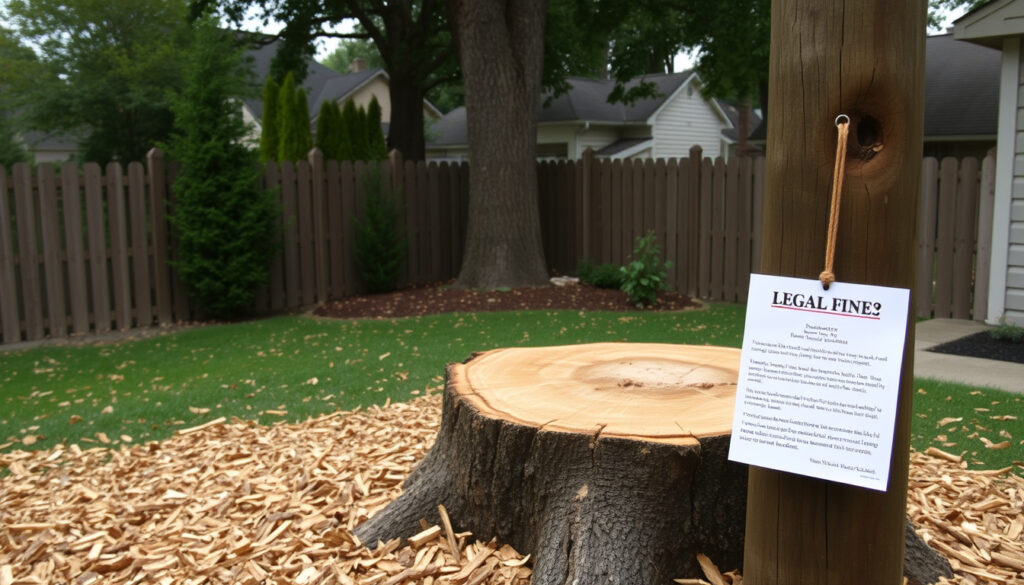
Laura Mursell Fined $16,250 for Cutting Neighbour’s Protected Tree
If you’ve ever had a dispute with a neighbour over a tree, you know how quickly things can escalate. One Auckland woman learned that lesson the hard way—and the bill came to $16,250.
Fine Amount: $16,250 · Location: Auckland, New Zealand · Tree Status: Protected notable tree · Date of Conviction: 18 Dec 2024 · Victim: Neighbour’s tenants
Quick snapshot
- Fine of $16,250 imposed on 18 Dec 2024 (Auckland Council)
- Auckland Council enforces notable tree protections via the District Court (Auckland Council)
- The exact date the tree was cut by Mursell
- The full court reasoning behind the conviction
- The tree’s specific species or Schedule 10 details
- Pre-2024: Dispute with neighbours begins
- 2024: Contractor hired to cut branches
- 18 Dec 2024: Conviction and fine imposed
- Property owners urged to check tree status before any work
- Auckland Council continues enforcement via District Court
The table below consolidates the verified legal facts from the case, with primary sources drawn from Auckland Council policy and court records.
| Label | Value |
|---|---|
| Name | Laura Mursell |
| Address | Finch St, Auckland |
| Fine | $16,250 |
| Tree Type | Protected notable |
| Court Outcome | Convicted |
Can you cut overhanging branches from a neighbour’s tree?
The line between your rights and your neighbour’s property rights isn’t always clear—and the Mursell case makes that painfully obvious. In New Zealand, the general rule allows you to trim overhanging branches up to the property boundary, but that permission evaporates when the tree carries protected status.
Legal rights in New Zealand
Under the Resource Management Act 1991, which provides the national framework for tree protection, property owners have limited recourse against neighbouring vegetation. You can typically trim growth that crosses your boundary, but this “self-help” right doesn’t override protection laws. Notable trees listed in Schedule 10 of the Auckland Unitary Plan require council consent for any removal or significant pruning, regardless of where they stand on the property.
Risks with protected trees
The stakes are high. One arborist was fined $32,500 by Auckland District Court for cutting down a notable Copper Beech tree without consent, according to NZ Landscaper Magazine. For companies, the maximum penalty reaches $600,000. The Mursell case demonstrates that individual homeowners face no protection from these consequences—conviction and a five-figure fine can result from a single contractor visit.
Self-help cutting on a protected tree triggers fines that dwarf what any neighbour dispute was ever worth.
Can I get my neighbour to cut back or reduce the height of their trees?
Short of proving a genuine hazard, you generally cannot force a neighbour to cut their trees. Auckland Council doesn’t provide a mechanism to compel trimming for aesthetics, shade, or view concerns.
Council mediation options
When disputes arise, the first step is usually contacting Auckland Council, which can provide guidance on whether a tree is protected. The council’s Heritage Unit handles notable tree applications and can be reached at heritage@aucklandcouncil.govt.nz. Mediation through community services is another route, though it requires both parties to participate voluntarily.
When force is not possible
The Notable Trees Overlay protects individual trees and groups from destruction due to development. If a neighbour’s tree isn’t protected, you may trim the overhang yourself—but document everything and consider a written agreement to avoid claims of trespass or property damage.
Can my neighbour force me to cut my hedge?
Hedges sit in a different legal category than trees. As the property owner, you are responsible for maintaining your own hedges, and neighbours cannot compel trimming simply because they find the growth inconvenient.
Ownership responsibilities
Under New Zealand property law, boundaries and structures—including hedges—are the owner’s responsibility. A neighbour can request trimming, and you can agree informally, but refusal doesn’t give them legal standing to intervene. The situation changes only if the hedge poses a documented safety risk or violates specific local bylaws.
Boundary hedge rules
The Auckland Homeowner guide clarifies that most private property trees lack automatic protection—trees must be explicitly scheduled to receive legal safeguards. This means a hedge that isn’t on the Notable Trees Register doesn’t trigger the same severe penalties as cutting a protected tree without consent.
Trees on the Notable Trees Register face strict consent requirements, but ordinary hedges and non-scheduled trees operate under standard property law—with far lower stakes for routine maintenance.
What is the 5 15 90 rule tree felling?
The “5-15-90 rule” belongs to forestry safety standards, not residential property disputes. It describes protocols for felling trees in commercial forestry operations, where worker safety distances are calculated based on tree height.
Forestry safety guidelines
In commercial forestry, the rule specifies that workers must maintain distances proportional to tree height during felling operations. This has no application to urban homeowners or neighbour disputes. Proclimb NZ notes that Auckland Council’s practical advice is simply to “Check Before You Chop”—regardless of any safety rule comparisons.
Not applicable to urban disputes
For residential property owners in Auckland, the relevant rules aren’t safety distances but planning consent requirements. Removing or significantly pruning a notable tree without resource consent is an offence under the Resource Management Act 1991, with penalties enforced through the District Court.
Forget forestry safety ratios. For Auckland homeowners, the only relevant calculation is whether the tree is protected—and if so, whether you have council consent before any work begins.
Which tree is not allowed to cut?
Trees listed on the Auckland Unitary Plan’s Schedule 10 cannot be removed or significantly altered without resource consent. These are deemed notable for their age, size, species, cultural significance, historical value, or environmental benefits.
Protected and notable trees
Notable trees receive legal protection regardless of their position on the property—front, rear, or boundary—with no exceptions for convenience, according to Auckland Homeowner. The protection also applies to trees in coastal areas, significant ecological areas, or riparian margins under the Auckland Unitary Plan.
Auckland Council rules
According to Auckland Council’s official site, a notable tree cannot be cut down or removed without the council approving a resource consent application. The Tree Council NZ confirms that while Auckland ended blanket tree protection on January 1, 2010, notable and scheduled trees retain full protection under the rules.
Timeline of events
- — Auckland ends blanket tree protection; notable trees retain full protection (Tree Council NZ)
— Resource Management Act changes end automatic protection for all trees (Hardfell)
— Contractor hired to cut branches from neighbour’s protected tree
— Conviction recorded; $16,250 fine imposed
Confirmed versus unclear
Confirmed
- Fine amount: $16,250
- Protected tree status in Auckland
- Auckland, New Zealand location
- Conviction recorded 18 Dec 2024
- Dispute involved neighbour’s tenants
Unclear
- Exact date of cutting
- Full court reasoning
- Specific tree species
- Whether consent was requested and denied
What authorities say
“A notable tree has greater legal protection, meaning it: can’t be cut down or removed without us approving a resource consent.”
— Auckland Council official guidance
“Always ‘Check Before You Chop’.”
— Auckland Council enforcement messaging
“Companies face fines up to $600,000 for removing or altering a notable tree without consent.”
— NZ Landscaper Magazine
The pattern is consistent across Auckland’s tree enforcement history: self-help removal of protected trees leads to prosecution. While minor maintenance of dead branches may not require consent, structural pruning does, and any work on a Schedule 10 tree demands formal approval from the Heritage Unit.
Related reading: One Tree Hill Auckland: Guide to Hikes, History & Views
To avoid penalties like those imposed on Mursell, neighbours in disputes should consider hiring local tree service experts compliant with protection rules.
Frequently asked questions
What happened in the Laura Mursell tree cutting case?
Laura Mursell was convicted in Auckland District Court on 18 December 2024 and fined $16,250 for cutting branches from a neighbour’s protected notable tree on Finch Street. The case was heard in the Auckland District Court, and the conviction highlights the serious consequences of unauthorized work on scheduled trees.
Why was Laura Mursell fined?
Mursell was fined for damaging a tree that holds protected status under Auckland’s Notable Trees Overlay. Without council consent, cutting or significantly pruning a notable tree violates the Resource Management Act 1991 and the Auckland Unitary Plan, triggering enforcement through the courts.
What are protected trees in Auckland?
Protected trees in Auckland are those listed on Schedule 10 of the Auckland Unitary Plan. These trees are deemed notable for their age, size, species, cultural significance, historical value, or environmental benefits. They cannot be removed or significantly pruned without resource consent from Auckland Council.
Can you legally cut a neighbour’s tree branches?
Generally, you can trim overhanging branches up to your property boundary. However, this right does not apply to protected notable trees. Even if branches cross your fence, cutting them without council consent is illegal if the tree is scheduled.
How to check if a tree is protected?
Auckland Council provides a property search tool on its website to check notable tree status. You can also email heritage@aucklandcouncil.govt.nz to request information or submit a notable tree application form. The Tree Council NZ website offers additional guidance on the rules.
What to do in a neighbour tree dispute?
First, verify whether the tree is protected by contacting Auckland Council. If it is protected, any trimming requires consent. For non-protected trees, you can trim overhanging branches yourself but should document the work. For disputes, consider council mediation or legal advice—but never proceed with cutting a protected tree without approval.
What fines apply for illegal tree cutting in NZ?
Penalties vary by tree type and violator. For notable trees, companies can face fines up to $600,000. An arborist was fined $32,500 by Auckland District Court for removing a protected Copper Beech without consent. Individual homeowners face lower statutory maximums but still risk five-figure fines and criminal conviction records.
For Auckland homeowners and property investors, the message is unambiguous: before touching any tree—particularly one on or near your boundary—verify its protected status through council channels. The Mursell conviction demonstrates that self-help solutions to neighbour disputes can result in fines that far exceed whatever the original dispute was worth, and a criminal record that follows you into future property transactions.
More related posts
 Five Mile Shopping Centre: Shops, Map, Hours Queenstown
 Blues vs Crusaders 2025: Results, How to Watch & Rivals
 Can I Run It? Check Game Compatibility on PC, Mac, Laptop
 Brick Bay Sculpture Trail – Auckland’s Premier Outdoor Art Trail
 PGA Tour Live Leaderboard – Real-Time Scores and Standings
 What Is a Thermos? Definition, Uses, and Differences Explained
 SPCA Auckland (Mangere) Adoption: Process, Fees & Location