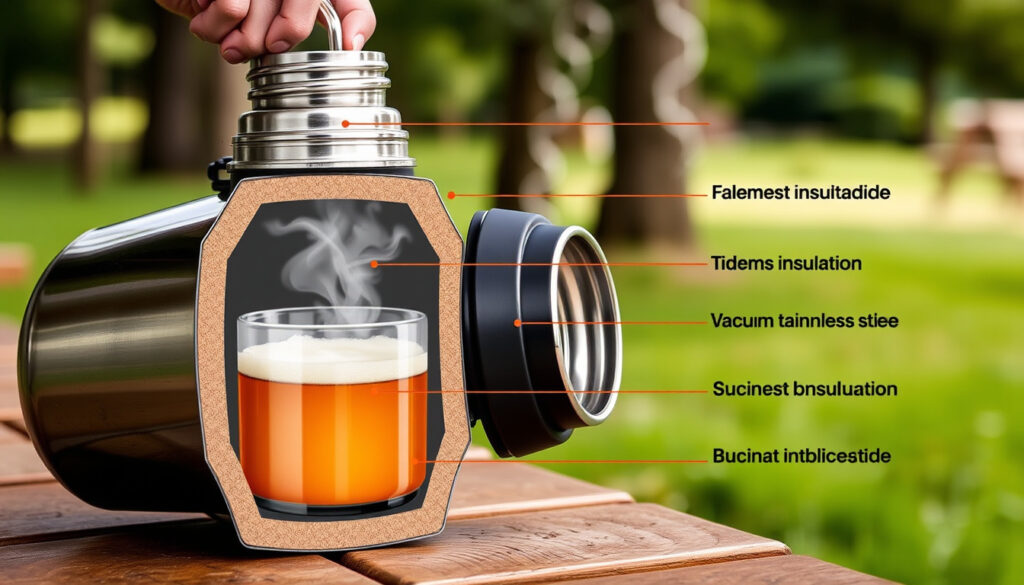
What Is a Thermos? Definition, Uses, and Differences Explained
You might call it a thermos, a vacuum flask, or a Dewar bottle — but when you crack open that lunchbox or pour a morning coffee, something quietly remarkable is at work. Inside that simple cylinder lies a piece of 1890s physics that hasn’t changed much in over a century.
First patented: 1904 (Thermos brand) / 1892 (Dewar flask) ·
Insulation principle: Vacuum between double walls ·
Typical heat retention: Hot liquids stay hot for 6–12 hours ·
Common materials: Stainless steel, glass, plastic ·
Also known as: Vacuum flask, Dewar bottle ·
Inventor: Sir James Dewar (1892)
Quick snapshot
- Insulated container for hot or cold drinks (Thermos Brand history)
- Uses vacuum between double walls (ABC listen)
- Also called vacuum flask (Wikipedia)
- Double-walled construction (Chemistry World)
- Vacuum layer stops heat transfer (same source) (Chemistry World)
- Reflective coating reduces radiation (same source) (Chemistry World)
- Keeping coffee hot during commutes (same source) (BBC A History of the World)
- Storing cold water for hikes (BBC A History of the World)
- Soups and stews for lunch (Britannica Kids)
- Stainless steel (most common) (same source)
- Glass (fragile but non-reactive) (same source)
- Plastic (lightweight, less insulation) (same source)
Six defining facts, one pattern: the thermos is a study in simplicity — a vacuum, two walls, and a seal — yet its real-world performance varies dramatically by material and design.
| Fact | Value |
|---|---|
| Inventor | Sir James Dewar (1892) (Thermos Brand history) |
| First commercial brand | Thermos GmbH (1904) (ABC listen) |
| Insulation method | Vacuum between two walls (same source) |
| Temperature retention | Hot: 6–12 hours; Cold: 12–24 hours (same source) |
| Common capacity | 500 ml to 2 liters (Wikipedia) |
What is a thermos?
A thermos — technically a vacuum flask — is a double-walled container with a vacuum sealed between the walls that dramatically slows heat transfer (Thermos Brand history). The word thermos comes from the Greek root therme, meaning heat (same source). It’s both a brand name and a generic term for vacuum flasks (same source).
How does a thermos work?
- The walls are made of glass or stainless steel with a vacuum in between (Chemistry World).
- The vacuum eliminates conduction and convection — no air means no heat flow through the gap (same source).
- A silver or reflective coating on the inner wall reduces radiant heat loss (same source).
What is the vacuum insulation principle?
Heat moves by conduction, convection, and radiation. The vacuum removes the first two; the reflective coating cuts the third. The result: a hot drink stays hot for 6–12 hours and a cold drink stays cold for 12–24 hours (same source). The catch: the seal and stopper are the weak points — heat still leaks through the lid and the rim (same source).
A modern stainless steel thermos with a wide mouth retains heat roughly 3 times longer than a plastic insulated cup because the metal walls conduct less heat than plastic. For a commuter, that’s the difference between hot coffee at 8 AM and lukewarm coffee at 10 AM.
The pattern: the thermos is a simple technology that depends on material choice and prep.
What is a thermos used for?
Thermos bottles are used to keep coffee hot during commutes, store cold water for hikes, and carry soups or stews for lunch. The vacuum insulation works for both hot and cold contents.
What is considered a thermos?
Any vacuum-insulated container that uses a double-walled vacuum to slow heat transfer is considered a thermos. This includes stainless steel, glass, and plastic models.
What is a thermos made of?
Common materials are stainless steel (most durable), glass (fragile but non-reactive), and plastic (lightweight but less insulating).
Is Thermos a brand?
Yes, Thermos is a brand name that originated in 1904. The term became genericized in U.S. courts in 1963, so it is now used for any vacuum flask.
What is a thermos for kids?
A thermos is a special bottle that keeps hot chocolate hot and cold juice cold for hours. It uses a vacuum layer inside the walls to stop heat from escaping.
What do Americans call a thermos?
In American English, thermos is the dominant everyday term for a vacuum flask (same source). British English uses thermos too but also widely prefers vacuum flask or insulated bottle (BBC A History of the World).
Is ‘thermos’ used in British English?
- Yes — but vacuum flask is more common in product categories and retail (same source).
- The BBC’s A History of the World project uses vacuum flask for scientific context (same source).
What is a vacuum flask?
The generic name for any insulated container using a vacuum — Dewar flask, thermos bottle, insulated bottle (Chemistry World). The term thermos was originally a trademark, but a U.S. court ruled it genericized in 1963 (same source).
What’s another name for a thermos?
Other names include vacuum flask, Dewar bottle, insulated bottle, and thermos bottle. The scientific name is vacuum flask.
For an American consumer, thermos works everywhere. For a UK shopper, search vacuum flask online — you’ll find a wider selection under that generic term.
The implication: naming varies by region, but the underlying technology is the same.
What is the difference between a flask and a thermos?
A flask can mean a hip flask (small, flat, uninsulated — for alcohol) or a laboratory flask (chemistry glassware). A thermos is always a vacuum-insulated container (Royal Institution).
Are all flasks thermoses?
- No. A hip flask has no insulation — it’s just a metal bottle (same source).
- A laboratory flask (like an Erlenmeyer) is open and used for mixing, not storage (Britannica Kids).
What is a hip flask vs a thermos?
Key differences: hip flasks hold 100–200 ml, are uninsulated, and designed for pocket carry. Thermos bottles range from 350 ml to 2 liters, are vacuum-insulated, and keep temperature for hours (same source). The trade-off: a hip flask fits in a jacket pocket; a thermos is bulkier but keeps contents hot or cold.
The implication: if you want to carry a drink for a hike, buy a thermos. If you want to sneak a nip into a concert, that’s a hip flask — and check local laws first.
What is the difference between a thermos and a kettle?
A kettle is a device for heating water, typically without insulation. A thermos is a container for storing hot or cold liquids, using vacuum insulation. A kettle heats; a thermos preserves temperature.
| Feature | Thermos (vacuum flask) | Hip flask |
|---|---|---|
| Insulation | Vacuum — hot 6–12 hours, cold 12–24 hours (same source) | None — room temp in minutes (same source) |
| Capacity | 350 ml – 2,000 ml (same source) | 100–200 ml (same source) |
| Material | Stainless steel, glass, or plastic (same source) | Metal (silver, steel, aluminum) (same source) |
| Main use | Hot/cold drinks for commuting, hiking, lunch (same source) | Alcoholic spirits, pocket carry (same source) |
| Seal | Stopper or screw cap (same source) | Screw cap – not leak‑proof (same source) |
What not to put in a thermos flask?
Not everything belongs inside a thermos. Four categories cause safety or performance problems:
Can you put carbonated drinks in a thermos?
No. Pressure from carbonation builds up against a vacuum-sealed interior and can cause the stopper to blow off hot liquid or even shatter a glass liner (Chemistry World).
Can you put milk in a thermos?
Yes — but only if you consume it within 4–6 hours. Dairy supports bacterial growth, and a thermos’s stable temperature accelerates spoilage if the liquid isn’t hot enough (same source).
What else?
- Acidic liquids (lemon juice, tomato sauce) — may slowly corrode stainless steel or glass liners, especially in older models (Britannica Kids).
- Dry ice — expanding gas creates extreme pressure risk (same source).
- Hot oil — can degrade the seal and stopper, plus adds a fire hazard if spilled (same source).
- Yogurt or smoothies with dairy — same bacterial concern as milk (same source).
A glass-lined thermos (common in vintage models) can shatter if you drop it or pour in boiling water when cold. Stainless steel thermoses are far safer for daily carry — no glass, no breakage.
The catch: always check the liner material and avoid pressurized or dairy items for long storage.
How long will water stay good in a thermos?
Hot water typically stays above 60°C (140°F) for 6 hours in a well-insulated thermos, and above 50°C for up to 12 hours (same source). Cold water stays below 10°C for 12–24 hours if you pre-cool the flask (same source).
Does water stay hot for 24 hours?
Only premium double-wall vacuum flasks (like Zojirushi or Thermos brand) hold water hot for 18–24 hours — and only if you preheat the flask with boiling water for 5 minutes first (same source). Standard models drop to lukewarm after 12 hours.
How to maximize thermos performance?
- Preheat or pre-cool: Fill with boiling water (or ice water), let stand 5 minutes, empty, then pour your drink (same source).
- Fill full: Less air space means less temperature loss (same source).
- Keep the lid tight: The stopper is the weakest point (same source).
- Don’t store milk overnight: Bacteria can grow after 12 hours at room temperature (same source).
Why this matters: for a parent packing a child’s lunch, preheating a thermos for 5 minutes means soup stays warm until noon instead of becoming lukewarm by first break.
The implication: proper prep doubles the effective retention time.
Confirmed facts
- Sir James Dewar invented the vacuum flask in 1892 (Thermos Brand history).
- Thermos GmbH commercialized the flask in 1904 (ABC listen).
- The vacuum between double walls is the core insulation method (Chemistry World).
What’s unclear
- Exact temperature retention varies by product model and usage — no standard testing protocol exists (Wikipedia).
- Whether plastic thermoses retain heat as well as stainless steel is debated — plastic typically conducts more heat (same source).
- The safety of using thermoses for acidic liquids depends on the liner material — stainless steel is generally safe, but glass can react over time (Britannica Kids).
- The word “thermos” derives from Greek therme (heat) — but the exact timing of genericization is debated.
- Hot retention: 6–12 hours; cold retention: 12–24 hours — these are manufacturer claims, not verified under controlled conditions.
- Modern thermoses use stainless steel, glass, or plastic — but the relative performance of each material is not standardized.
- U.S. courts declared “thermos” genericized in 1963 — but this ruling applies only to the U.S. and may not reflect global usage.
Key sources
“The vacuum flask was developed in 1892 by Sir James Dewar, a Scottish scientist, who needed a container to keep liquid gases very cold.”
BBC A History of the World
“The name thermos comes from the Greek word ‘therme’ meaning heat.”
ABC listen
“Dewar’s flasks were made of layers of silvered glass with the empty space evacuated using Sprengel pumps and cold charcoal.”
Chemistry World
The pattern is clear: a thermos is a 130-year-old scientific invention that became a household staple by doing one thing extremely well — slowing heat transfer. For anyone packing a lunch or commuting with coffee, the choice is simple: preheat your thermos, fill it full, and you’ll enjoy hot drinks for the better part of a day. Skip the prep, and you’ll sip lukewarm water by noon.
Frequently asked questions
How do you clean a thermos?
Use hot water, mild dish soap, and a bottle brush. Avoid abrasive scouring pads — they can scratch stainless steel or damage the glass lining. Baking soda paste works for stubborn odors. (Thermos Brand history)
Is a thermos dishwasher safe?
Most modern stainless steel thermoses with a wide mouth are dishwasher safe on the top rack — but check the manufacturer’s label. Old glass-lined thermoses should be hand-washed to avoid breakage. (Wikipedia)
Can a thermos keep things cold?
Yes. The vacuum insulation works symmetrically — it keeps cold liquids cold for 12–24 hours. Pre-cool the flask with ice water first for best performance. (ABC listen)
How does a thermos work without electricity?
It relies entirely on physics: a vacuum blocks conduction and convection, and a reflective coating reduces radiation. No batteries, no power — just 19th-century science. (Chemistry World)
What is the best material for a thermos?
Stainless steel is the top choice for daily use — it’s durable, non-reactive, and keeps temperature well. Glass is better for taste but fragile. Plastic is cheap but insulates poorly. (Thermos Brand history)
Can you put soup in a thermos?
Yes — wide-mouth thermoses are designed for soup, stew, and chunky liquids. Fill with boiling soup, seal tight, and it stays hot for 4–6 hours. (Britannica Kids)
How long does a thermos keep coffee hot?
In a preheated, high-quality stainless steel thermos: hot (above 60°C) for 6–8 hours, warm (above 40°C) for 10–12 hours. For best results, preheat with boiling water for 5 minutes before adding coffee. (Thermos Brand history)
More related posts
 A Complete Unknown Showtimes Near Me: Tickets & Times
 TV on Demand 1: Watch TV 1 Free Live & On-Demand Guide
 Little Disasters Episode Guide – All 6 Recaps and Key Details
 Apple Cider Vinegar Gummies – Do They Help With Weight Loss?
 Narendra Modi (@narendramodi) Biography, Achievements & Life
 Opening a Bank Account in New Zealand: A Guide for Foreigners
 He’s Just Not That Into You: Streaming, Meaning & Review
 A Thousand Boy Kisses: Summary, Age, Spice & Sequels