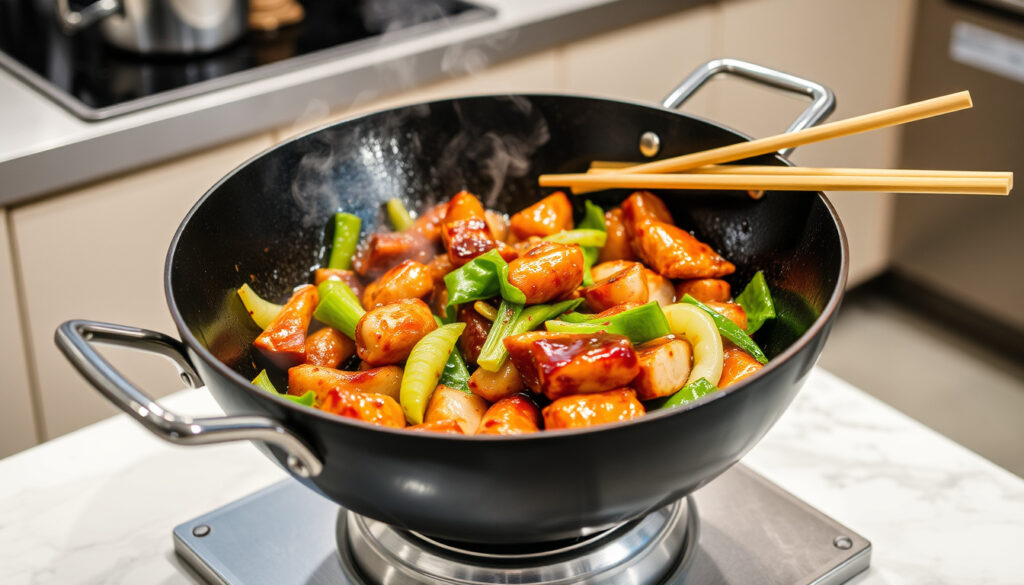
Chicken Stir Fry NZ – Quick & Easy Recipe
Busy weeknights don’t leave much time for cooking, but a chicken stir fry New Zealand-style delivers in under 20 minutes. And with heart-healthy advice from the Heart Foundation NZ (New Zealand heart health authority), it’s easier than ever to make a stir fry that’s good for you too.
Average cooking time: 20 minutes ·
Popular vegetables used: broccoli, carrot, capsicum, edamame ·
Key sauce base: soy sauce, honey, sesame oil ·
Calories per serving (approx): 350-450 kcal ·
Protein per serving: 30-35 g
Quick snapshot
- Can be cooked in under 20 minutes (Heart Foundation NZ)
- Soy, honey, and sesame oil are common sauce ingredients (Heart Foundation Australia)
- Broccoli and capsicum are typical NZ vegetables (Heart Foundation NZ)
- Exact calorie counts vary by recipe and serving size
- Some chefs recommend marinating chicken first, others cook it raw
- Nutritional breakdown depends on oil type and vegetable mix
- Leftovers keep 2 days in the fridge
- Total cook: 10 minutes after 10 minutes prep (Recipe steps)
- Sauce preparation takes 2 minutes (Recipe steps)
- Vegetable cooking time: 3-4 minutes (Recipe steps)
- Serve immediately over rice or noodles (Step 7) (Heart Research Institute)
- Garnish with sesame seeds and spring onion (Heart Research Institute)
Four key stats that sum up the standard recipe.
| Label | Value |
|---|---|
| Prep time | 10 minutes |
| Cook time | 10 minutes |
| Servings | 4 |
| Calories per serving | 400 kcal |
| Protein per serving | 30-35 g |
| Approx. cost per serve (NZ) | $4-6 |
What is a simple chicken stir fry recipe?
Ingredients for a basic stir fry
- 500 g chicken breast or thigh, sliced
- 1 head broccoli, cut into florets
- 2 carrots, sliced
- 1 red capsicum, sliced
- 1 onion, sliced
- 2 cloves garlic, minced
- 1 tbsp fresh ginger, grated
- 3 tbsp soy sauce (Heart Foundation Australia, heart health body)
- 1 tbsp honey
- 1 tbsp sesame oil
- 1 tbsp vegetable oil for frying
- 1 tbsp cornflour mixed with 2 tbsp water (slurry)
Using chicken thigh adds juiciness but a few extra grams of fat; breast keeps it lean. The Heart Foundation NZ recipe uses shredded cooked chicken to stay heart-friendly (Heart Foundation NZ).
Step-by-step cooking instructions
- Heat vegetable oil in a large frying pan or wok over high heat (Heart Foundation NZ YouTube, recipe video).
- Add sliced chicken and cook until browned, about 4-5 minutes. Remove and set aside.
- In the same pan, add onion, carrots, and broccoli. Cook for 2 minutes, then add capsicum.
- Add garlic and ginger, stir for 30 seconds.
- Return chicken to the pan. Add soy sauce, honey, and sesame oil. Toss well.
- Pour in the cornflour slurry and stir until the sauce thickens, about 1 minute.
- Serve immediately over steamed rice or noodles.
Cooking on high heat preserves vegetable crunch and locks in chicken moisture. The Heart Foundation NZ method recommends adding the sauce last to avoid sogginess (Heart Foundation NZ YouTube).
The trade-off: marinating the chicken for 20 minutes boosts flavour, but adds prep time. For a true 20-minute meal, skip the marinade and rely on the sauce for seasoning.
How do you make chicken stir fry with noodles?
Choosing the right noodles
The best noodles for chicken stir fry are those that hold their texture under high heat. Egg noodles, rice noodles, and hokkien noodles all work well. Cook noodles separately according to package directions (usually 3-5 minutes), then drain and rinse with cold water to stop cooking (Heart Foundation NZ, healthy recipes).
Incorporating noodles into stir fry
- Add cooked noodles at the very end, after the sauce has thickened.
- Toss gently to coat—avoid over-stirring or the noodles will break.
- For extra flavour, drizzle a little sesame oil over the noodles before mixing.
The catch: noodles absorb sauce quickly, so you may need to double the sauce recipe if serving with noodles. A typical ratio is 1.5x the sauce volume.
The implication: Noodles absorb sauce quickly, so adjust sauce volume to avoid a dry stir-fry.
How do you make healthy chicken stir fry?
Reducing oil and sodium
The Heart Foundation NZ (New Zealand’s leading heart charity) suggests using low-sodium soy sauce and limiting added oil to one tablespoon. Choose lean chicken breast, and load up on vegetables—aim for at least three different types. The Heart Foundation Australia’s honey and soy version uses cashews for healthy fats (Heart Foundation Australia, heart health body).
Heart Foundation recipe adaptations
- Swap regular soy sauce for reduced-salt soy sauce.
- Use frozen broccoli and carrots when fresh isn’t available (Heart Foundation NZ YouTube, substitution tips).
- Replace honey with a smaller amount of maple syrup if cutting sugar.
- Add beaten egg, tofu, or extra frozen veg to stretch the meal without increasing sodium (Heart Foundation NZ YouTube).
The Canadian Heart and Stroke Foundation (heart health authority) includes ginger, curry, and hoisin in their stir fry, proving that heart-healthy doesn’t mean bland. Their recipe covers and cooks the stir fry for 5 minutes until the chicken is no longer pink inside.
Many commercial stir fry sauces are high in sugar and sodium. Making your own sauce from soy, honey, and ginger gives you full control—and it takes just 2 minutes. The Heart Research Institute’s stir-fry recipe adds lime and sesame seeds for a fresh finish (Heart Research Institute, cardiovascular research body).
Confirmed facts
- Chicken stir fry can be cooked in under 20 minutes
- Soy sauce, honey, and sesame oil are common sauce ingredients
- Broccoli and capsicum are typical vegetables in NZ
- Heart Foundation NZ has a dedicated chicken and broccoli stir-fry recipe
What’s unclear
- Exact calorie counts vary by recipe
- Some chefs recommend marinating chicken, others do not
- Optimal vegetable mix is subject to personal taste
“The key to a great stir-fry is using fresh ginger, garlic, and cooking on high heat. It brings the whole dish to life in minutes.”
— Nadia Lim, NZ chef and cookbook author
“A five-ingredient chicken stir-fry is the ultimate quick dinner—just chicken, soy, honey, garlic, and your favourite veg.”
— Jamie Oliver, British chef and cookbook author
“This chicken and broccoli stir-fry is designed to be heart-friendly: we use lean chicken, low-sodium soy, and plenty of vegetables.”
— Heart Foundation NZ, recipe developer
For New Zealand home cooks, the choice is straightforward: a chicken stir fry delivers flavour, speed, and flexibility. Whether you follow the Heart Foundation’s low-sodium version or Nadia Lim’s high-heat technique, you can have dinner on the table in 20 minutes. The only risk is that you’ll never order takeout again.
oursaltykitchen.com, heartandstroke.ca, youtube.com, youtube.com
For a quick and easy chicken stir fry, pair it with this homemade stir fry sauce recipe to elevate the flavors.
Frequently asked questions
Can I use frozen vegetables for chicken stir fry?
Yes. The Heart Foundation NZ suggests frozen broccoli and carrots work perfectly (Heart Foundation NZ YouTube). Cook them directly from frozen—no thawing needed.
What is the best oil for stir frying?
Use a neutral oil with a high smoke point, like vegetable, peanut, or canola oil. Sesame oil is for flavour, not frying.
How do I prevent chicken from drying out?
Slice chicken against the grain and cook on high heat for no more than 5 minutes. Marinating for 15 minutes in soy and cornflour helps retain moisture.
Can I substitute chicken with tofu?
Absolutely. Press firm tofu, cube it, and pan-fry before adding vegetables. The Heart Foundation NZ suggests adding tofu to stretch the meal (Heart Foundation NZ YouTube).
What side dishes go with chicken stir fry?
Steamed jasmine rice, brown rice, or egg noodles are classic. For a low-carb option, serve over cauliflower rice or a bed of sautéed greens.
How do I thicken stir fry sauce?
Mix 1 tablespoon cornflour with 2 tablespoons cold water to make a slurry. Add it in the final minute of cooking and stir until the sauce thickens (Heart Foundation NZ YouTube).
Is chicken stir fry keto-friendly?
Yes. Skip the honey and serve with low-carb vegetables like broccoli, capsicum, and zucchini. Use a sugar-free soy alternative.
More related posts
 Hair Cuts for Boys: Best 2025 Styles, Trends & Tips
 Inter Miami vs Orlando City: Results, Lineups, Rivalry
 A-League Men Table 2025-26 | Standings, Fixtures & Results
 What Is an Email Alias – Definition, Setup and Privacy Benefits
 Average Power Bill NZ: Monthly Costs, Savings & Cheap Providers
 Where to Sell Outdoor Furniture: Top Irish Platforms Compared
 Adelaide United FC: Ownership, Rivals, Stadium, Titles & More
 Bed Base with Storage – Sizes, Reviews and Buying Guide