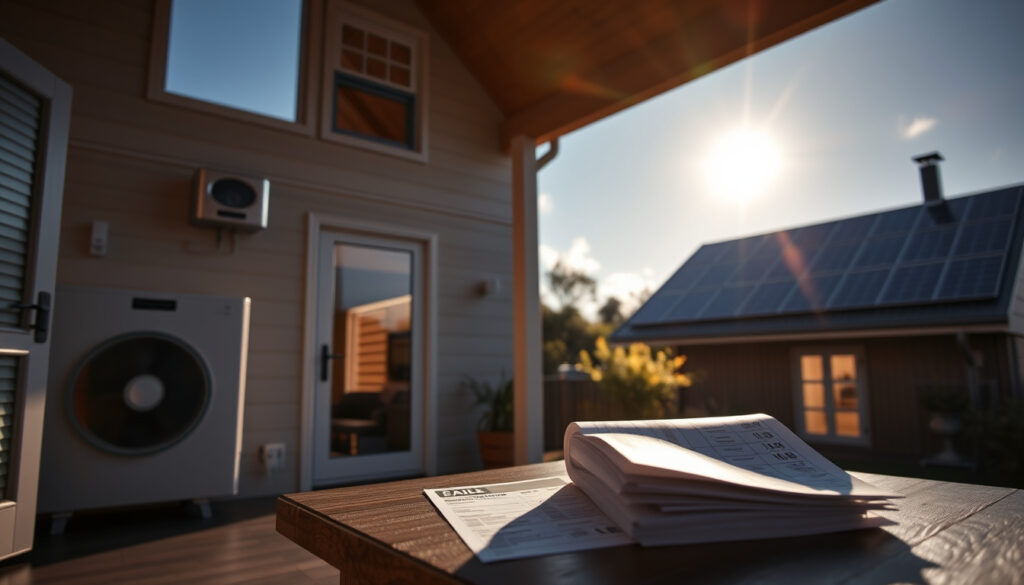
Average Power Bill NZ: Monthly Costs, Savings & Cheap Providers
There’s nothing quite like the jolt of opening a power bill that’s higher than you expected. This guide breaks down exactly what New Zealand households pay on average, explains why your bill might spike, and shows you where real savings can be found — using official data and tried-and-true tools.
Average annual power bill: $2,588 ·
Average monthly bill: $216 ·
Average price per kWh: ~34 cents ·
Average household consumption: 7,100 kWh per year
Quick snapshot
- $216 overall, with winter peaking at $279 (Powerswitch NZ (official comparison service))
- ~34 cents on average, but varies from 26.75¢ in Dunedin to 41.68¢ in Kerikeri (MoneyHub NZ (consumer finance guide))
- 1 person: ~$120–$140/month · 2 person: ~$160–$200/month · 3 person: ~$200–$250/month · 4 person: ~$250–$350/month (Powerswitch NZ (official comparison service))
- Switch providers to save $100–$300/year · Use heat pumps for cheap heating · Reduce shower time · Improve insulation (EECA (government energy efficiency agency))
“New Zealand households are paying an average of $2,588 annually for electricity, which works out to about $216 per month.”
— Powerswitch NZ (official comparison service)
The table below summarises the key figures every household should know before comparing plans.
| Category | Value |
|---|---|
| Average annual bill | $2,588 |
| Average monthly bill | $216 |
| Average price per kWh | 33.89–34.25 cents |
| Average household consumption | 7,100 kWh/year |
| Cheapest provider (generic) | Varies by region |
How much is the average electricity bill in New Zealand?
Getting a clear answer means looking at a few different numbers. Official data from the Powerswitch NZ (Consumer NZ’s independent service) shows the average Kiwi household pays about $2,588 annually — that’s roughly $216 per month. But that single figure hides big seasonal swings.
What is the average monthly power bill?
- Summer: $172 — lower usage from heating being off and longer daylight hours.
- Autumn: $215 — as temperatures drop, heating use starts.
- Winter: $279 — the peak, with heating accounting for 30–40% of home energy use (EECA (government energy efficiency agency)).
- Spring: $197 — a transition month as heating demand falls.
What is the average power bill per week?
Dividing the $216 monthly average gives about $50 per week. In winter that jumps closer to $64 per week, while summer sits around $40 per week.
What is the average power bill for a 1 person household?
Based on consumption data from Powerswitch NZ (official comparison tool) and industry estimates, a single person uses around 4,500 to 5,500 kWh per year. That translates to roughly $120–$140 per month, or $28–$33 per week.
What is the average power bill for a 2 person household?
A two-person household typically consumes between 6,000 and 7,500 kWh annually. This works out to about $160–$200 per month, or $37–$46 per week.
What is the average power bill for a 3 person household?
With three occupants, usage climbs to roughly 7,500 to 9,000 kWh per year. The monthly bill is usually $200–$250, or $46–$58 per week.
What is the average power bill for a 4 person household?
A four-person household sits at the high end, consuming 9,000 to 11,000 kWh annually. That results in a monthly bill of $250–$350, and weekly costs of $58–$81.
How much does electricity cost in New Zealand?
The price you pay for electricity has two components: a per-kilowatt-hour (kWh) rate for the power you actually use, plus a fixed daily charge just to stay connected. Understanding both is key to comparing plans.
What is the average price per kWh?
As of early 2025, the average retail price per kWh sits around 34 cents. Power Compare (NZ energy comparison site) puts the figure at 33.89 cents, while Canstar (financial product comparison platform) reports 34.25 cents. Regional variation is significant: the MoneyHub NZ (consumer finance guide) notes that low-user rates range from 26.75 cents per kWh in Dunedin to 41.68 cents in Kerikeri.
How do daily charge rates affect the bill?
New Zealand operates two main tariff types. The Canstar (comparison service) explains that a standard user (over 8,000 kWh/year) pays lower per-kWh rates but higher daily charges. A low user (under 8,000 kWh/year) gets a capped daily charge — currently at $1.80 per day — but pays higher per-kWh rates. That cap is set to be removed from April 2026.
How do electricity prices compare across regions?
The map of electricity prices reveals a clear north-south divide, with transmission costs driving up rates in northern regions.
| Region | Low-user rate (c/kWh) |
|---|---|
| Dunedin | 26.75 cents |
| Christchurch | ~29 cents |
| Wellington | ~30 cents |
| Auckland | 29.67 cents |
| Kerikeri | 41.68 cents |
The trade-off: South Island regions tend to have cheaper electricity thanks to abundant hydro generation, while Northland and other northern regions pay a premium due to transmission costs and lower local generation capacity.
Why is my power bill so high in New Zealand?
If your bill feels out of whack, it’s usually down to a few big-ticket items. Heating leads the pack, but insulation quality and appliance habits also play major roles.
What is the cheapest way to heat a house in New Zealand?
“Heat pumps are the most cost-effective heating option for most homes — they deliver about 3–4 units of heat for every unit of electricity they consume.”
— EECA (government energy efficiency agency)
The EECA (government energy efficiency agency) confirms that heat pumps are the most cost-effective heating option for most homes. They deliver about 3–4 units of heat for every unit of electricity they consume. Using a heat pump for winter heating costs significantly less than running electric panel heaters or portable gas heaters.
How does insulation affect power bills?
Poor insulation can increase heating costs by up to 20%, according to EECA (New Zealand’s energy efficiency authority). The agency’s data shows that retrofitting ceiling and underfloor insulation can cut heating energy use by a quarter in a typical uninsulated home. That translates to hundreds of dollars saved annually.
What appliances use the most electricity?
- Heating and cooling: 30–40% of total home energy use (EECA).
- Hot water: about 30% — especially if you have an electric cylinder.
- Refrigeration and freezing: roughly 10–15%.
- Laundry and cooking: 5–10% each.
Billing errors or incorrect meter readings can also cause inexplicably high bills. If a bill seems off, contact your provider and request a meter read.
The implication: Tackling heating and hot water first gives you the fastest payoff — these two categories alone account for up to 70% of household electricity consumption.
Who is the cheapest power provider in New Zealand?
There’s no single answer — the cheapest provider depends entirely on where you live and how much power you use.
How to compare power providers?
The Powerswitch (Consumer NZ’s free comparison service) is the official tool for comparing plans. You enter your address and current usage, and it shows you real-time deals from all major retailers including Contact, Genesis, Mercury, Meridian, Nova, Pulse, and others. Power Compare (energy comparison site) offers a similar function with its own rankings.
What is the Powerswitch tool?
Switching providers can save a typical Kiwi household between $100 and $300 per year, according to Powerswitch NZ (independent comparison service). The process takes about 5 minutes online, and the new provider handles the switch — there’s no interruption to your power.
The savings from switching providers effectively give you back the equivalent of several weeks of free power each year. For a household on a $216 monthly bill, that $200 annual saving is nearly one month’s bill wiped out simply by comparing plans.
What this means: Spending 10 minutes on Powerswitch once a year is the single highest-return activity available to most households — no tools, no installation, no behavioural change required.
How much does a 15 minute shower cost in New Zealand?
A long shower is one of the easiest ways to inflate your power bill without realising it. The cost depends on flow rate and whether you’re using an electric or gas water heater.
What is the 4 minute shower rule?
The EECA (energy efficiency authority) promotes the 4-minute shower rule — cutting shower duration can reduce hot water costs by up to 70%. A typical electric shower running for 15 minutes costs between $0.50 and $1.50 per shower, depending on the flow rate (typically 8–12 litres per minute).
How can reducing shower flow save money?
EECA estimates that reducing your shower flow by just 1 litre per minute can save a household $50–$100 per year. That’s because less water needs to be heated and pumped. A water-efficient showerhead is a low-cost upgrade that pays for itself in months.
For a family of four, each taking a 15-minute shower daily, the annual cost of showering alone can exceed $1,000. Switching to 4-minute showers with a low-flow head cuts that to around $300 — a $700 saving before you touch another appliance.
The pattern: Behavioural changes around hot water use deliver savings that rival switching providers, and the two strategies stack — you can both switch plans and shorten showers.
Related reading: Interior House Painters Auckland: Complete Cost & Decision Guide · Best Mattress in a Box NZ 2025: Ecosa vs Flatpack vs NZ Beds
figure.nz, moneyhub.co.nz, powershop.co.nz, insurspy.co.nz, powercompare.co.nz, genesisenergy.co.nz, octopusenergy.nz
To see which providers offer the lowest rates, check out our guide to the cheapest power company in NZ and how much you could save.
Frequently asked questions
How can I reduce my power bill in winter?
Focus on the biggest levers: use a heat pump instead of electric heaters, seal draughts, close curtains at dusk, and lower your thermostat by 1–2°C. EECA says each degree lower can save about 5% on heating costs.
Does switching power provider really save money?
Yes. Powerswitch data shows typical savings of $100–$300 per year for households that switch from the most expensive plan to the cheapest plan in their area.
What is the best time to use electricity to save on rates?
Some plans offer cheaper night rates (often called “night-only” or “time-of-use” tariffs). If you have a smart meter, running appliances like washing machines and dryers overnight or on weekends can cut your bill. Check with your provider for specific off-peak times.
Are there any government assistance programs for high power bills?
Yes. Work and Income NZ provides the Winter Energy Payment (from May to September) to eligible beneficiaries and superannuitants. It’s paid automatically — you don’t need to apply separately.
How often should I shop around for power plans?
At least once a year. Powerswitch recommends checking every 12 months because providers change rates and introduce new plans. Set a calendar reminder when you switch.
Is it worth installing solar panels to reduce my power bill?
Solar panels can significantly reduce or even eliminate your electricity bill if you have good sun exposure and daytime usage. However, the upfront cost ($5,000–$12,000 for a typical system) means the payback period is 8–12 years. The EECA provides guidance on whether solar makes sense for your home.
For New Zealand households wrestling with rising power costs, the path to savings is straightforward: check your plan against what’s available using the free Powerswitch tool, tackle the biggest energy drains — heating, hot water, and poor insulation — and consider a low-cost switch to a heat pump and efficient showerhead. The choice is clear: invest 10 minutes in comparing plans and a few hundred dollars in home efficiency upgrades, or keep paying hundreds more each year than you need to.
More related posts
 Ferry to South Island: Prices, Times, Car Costs & Booking
 Dunedin to Christchurch Flights: Time, Cost & Options
 How to Quit Vaping: Withdrawal Timeline & Lung Recovery
 Hair Cuts for Boys: Best 2025 Styles, Trends & Tips
 Milford Sound Scenic Flights: Guide, Reviews & Worth It?
 1 Bedroom Apartment Auckland: Rentals from $380/Week
 Chiefs vs Blues 2025: Match Details, History & Key Players
 Ear Wax Removal Near Me: Costs, Methods & Local Clinics