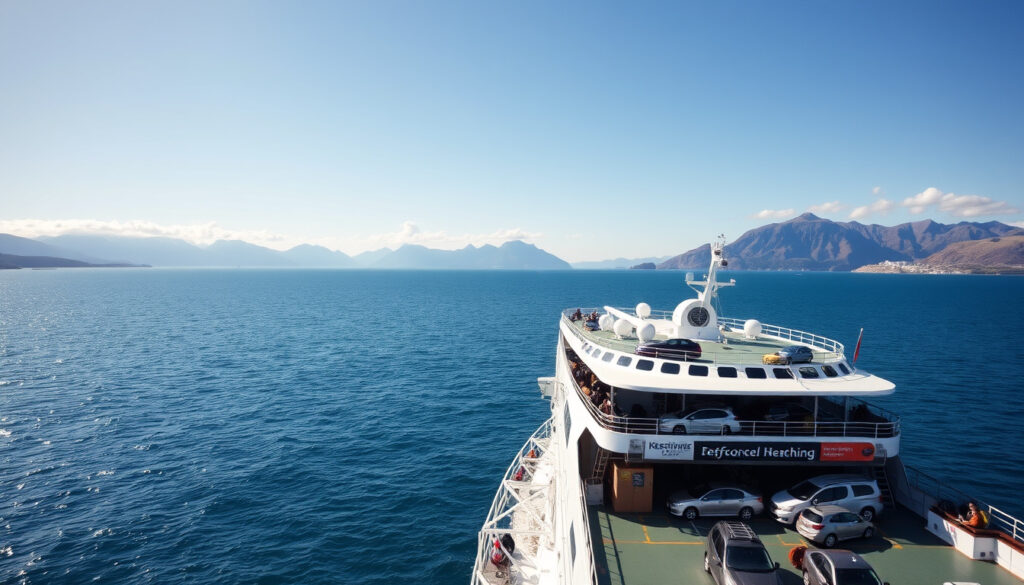
Ferry to South Island: Prices, Times, Car Costs & Booking
If you’re planning to move between New Zealand’s islands, the ferry crossing is part of the adventure most travelers don’t forget. The Cook Strait crossing takes 3–3.5 hours, offers views you won’t get from a plane, and can actually work out cheaper than flying—especially if you’re bringing a vehicle. Here’s what you need to know before booking.
Main Route: Wellington to Picton · Ferry Operators: Interislander and Bluebridge · Daily Sailings: Up to 6 · Weekly Sailings: 40 · Adult Fare Range: $67–$113
Quick snapshot
- Two operators dominate the route: Interislander and Bluebridge (NZ Pocket Guide)
- Ferry crossing duration: 3–3.5 hours depending on conditions (NZ Pocket Guide)
- Up to five ferries daily, operating from 2:30 AM to 8:00 PM (NZ Pocket Guide)
- Exact cheapest booking day varies seasonally
- Dynamic pricing not publicly standardized across operators
- Precise campervan size definitions for fare categories
- Christmas to end of January: peak booking window opens (2 weeks advance required) (Wise Move)
- October to March: busy season with higher fares (NZ Pocket Guide)
- Compare current 2026 fares for walk-on and vehicle passengers
- Weigh ferry convenience against flight speed
- Lock in vehicle bookings 2+ weeks ahead during summer
| Label | Value |
|---|---|
| Operators | Interislander, Bluebridge |
| Route | Wellington (North) to Picton (South) |
| Sailings | 6 daily, 40 weekly |
| Duration | 3–3.5 hours |
| Adult Price | $67–$113 |
What is the cheapest way to get from North to South Island New Zealand?
Walk-on passengers consistently pay the least—no surprise, since you’re sidestepping the vehicle fee entirely. For 2026 fares, Interislander walk-on tickets start at NZ$67 while Bluebridge charges NZ$84 for the same crossing (NZ$84 vs NZ$67, respectively). The gap widens if you book non-refundable seats, which are the cheapest fare option on both operators.
Ferry options compared
- Interislander: Walk-on from NZ$67, with vehicle from NZ$249
- Bluebridge: Walk-on from NZ$84, with vehicle from NZ$321
- Passenger + car combined: NZ$175–$255 depending on operator and booking timing
Both companies run the same Wellington–Picton route, but Bluebridge advertises roughly 50 weekly sailings while Interislander operates multiple daily departures. Family passes exist on both and reportedly offer the best per-person value for groups traveling together.
Timing for lowest prices
Early morning ferries tend to be cheaper, according to travel guides covering the Cook Strait crossing. Off-season travel—roughly October through March—sees elevated demand and higher fares, while May through August typically brings lower rates. Booking early secures discounts on both operators.
How much does it cost to take a car on the ferry to South Island?
Vehicle fares vary more than passenger tickets. A standard car plus driver costs NZ$249–$321 depending on which operator you choose, with Interislander starting lower at NZ$249 compared to Bluebridge’s NZ$321 for a vehicle crossing. Add passengers beyond the driver and the total climbs further.
Car ferry pricing breakdown
The passenger-plus-car fare spans a wide range—NZ$175–$255 according to 2026 pricing data. This reflects differences in vehicle size categories, booking flexibility, and seasonal demand. Small campervans cost more (NZ$205–$285), while large campervans command the highest rates (NZ$310–$405).
Additional fees
- Peak summer (December through January) demands 2-week advance booking for vehicles
- Vehicle check-in requires 1 hour before departure; walk-on passengers need only 30 minutes
- Non-refundable tickets carry the lowest price but zero flexibility
You cannot stay in your vehicle during the crossing—you must leave it in the parking deck and head to passenger areas. That 3–3.5 hours on the water means relying on onboard amenities, so factor in meals and entertainment costs.
How to travel between the North and South Islands in New Zealand?
Two ferry operators handle nearly all Cook Strait crossings: Interislander (the original operator, with both passenger and freight focus) and Bluebridge (which emphasizes passenger and vehicle service). Both depart from Wellington and arrive in Picton on the South Island. The route hasn’t changed—it’s a fixed crossing that’s remained consistent for decades.
Step-by-step booking
- Decide your crossing date and flexibility (non-refundable saves money, refundable adds cost)
- Choose your operator based on schedule availability and price point
- Select passenger count and vehicle type if bringing a car or campervan
- Add extras like cabin upgrades, pet transport, or meal packages as needed
- Confirm check-in time: 60 minutes for vehicles, 30 minutes for walk-on passengers
Operators overview
Rental companies occasionally offer one-way drop-offs or ferry discounts, so it’s worth asking your provider before booking separately. Some travelers save by renting on the South Island instead of paying one-way drop-off fees that can reach roughly NZ$150 plus ferry costs.
The ferry takes your car across—no need to park at a terminal and arrange separate transport on the other side. Interislander highlights this as a key convenience advantage over flying, where parking and vehicle logistics multiply quickly.
How long is the ferry from Wellington to South Island?
The Cook Strait crossing takes 3 to 3.5 hours under normal conditions. Weather can extend that window, and rough seas are common enough that both operators warn passengers to expect some motion. The journey operates daily from around 2:30 AM through 8:00 PM, with up to five ferries completing the route each day.
Crossing duration
The 3–3.5 hour window covers the open water transit. Add time for boarding (30–60 minutes depending on whether you’re walking on or bringing a vehicle), and you’re looking at roughly 4–5 hours total door-to-door.
Schedule details
Bluebridge claims roughly 50 weekly sailings, while Interislander runs multiple daily departures across a wider window. During peak summer, sailings fill quickly—particularly vehicle decks, which book out weeks in advance during December and January.
Is a ferry cheaper than flying?
For walk-on passengers, flights often undercut ferry prices. Domestic flights from Wellington to Blenheim or Picton run NZ$69–$200 and take just 25 minutes in the air. Compare that to NZ$67–$84 for a ferry walk-on ticket, and the math favors planes—until you add baggage, transport from airports, and time lost to connections.
- Walk-on ferry: NZ$67–$84
- Domestic flight: NZ$69–$200 (25 minutes)
- Baggage fees and airport transfers can add NZ$30–$80 to flight costs
The equation flips when vehicles enter the calculation. A small campervan pays car fees (NZ$205–$285), while a large one runs NZ$310–$405. Interislander notes that the “cheap one-hour flight has taken half a day and cost a fortune” once you factor in rental car logistics, airport parking, and ground transport. One TripAdvisor user reported flying was cheaper with a small campervan because it qualified for the regular car fee—but that’s an exception, not the rule.
Pros and cons
Ferries win on convenience with a car, views, and the ability to stretch during the crossing. Flights win on speed (25 minutes versus 3–3.5 hours) for passengers alone. The real question is whether your itinerary needs the vehicle on the other side—if yes, the ferry typically costs less overall than flying plus renting.
Walk-on passengers saving NZ$20–$50 by flying should weigh that against 2 bags of 30kg luggage limits on ferries and the freedom to bring whatever you want without airline restrictions.
Two main options cover the North-to-South crossing, and the choice hinges on whether you’re traveling with a vehicle.
| Criteria | Ferry (Interislander / Bluebridge) | Flight (Domestic Airlines) |
|---|---|---|
| Walk-on cost | NZ$67–$84 | NZ$69–$200 |
| Vehicle cost | NZ$249–$321 | Rent separate + ferry ~NZ$190+ |
| Journey time | 3–3.5 hours crossing | 25 minutes air time |
| Total door-to-door | 4–5 hours | 3–4 hours with connections |
| Bring car? | Yes, onboard | No—need new rental |
| Luggage limit | 2 bags × 30kg (walk-on) | Varies by airline |
| Scenery | Cook Strait views | Aerial views, weather-dependent |
For those driving their own car or campervan, the ferry typically wins on total cost, even at NZ$249–$321 per crossing—rental car fees, airport parking, and ground transport stack up fast.
| Specification | Details |
|---|---|
| Route | Wellington (North Island) to Picton (South Island) |
| Crossing duration | 3–3.5 hours (weather-dependent) |
| Daily sailings | Up to 5 ferries, 2:30 AM–8:00 PM |
| Weekly sailings | ~40 (Bluebridge advertises 50) |
| Walk-on fare range | NZ$67–$84 |
| Vehicle fare start | NZ$249–$321 |
| Passenger + car combined | NZ$175–$255 |
| Small campervan fare | NZ$205–$285 |
| Large campervan fare | NZ$310–$405 |
| Check-in (vehicle) | 60 minutes before departure |
| Check-in (walk-on) | 30 minutes before departure |
| Peak booking window | 2 weeks ahead (Dec–Jan) |
Upsides
- Scenic Cook Strait crossing with views unavailable from planes
- Bring your own vehicle—no need to rent on the South Island
- May cost less than flying + new rental for travelers with cars
- Relax during the crossing; no traffic or parking logistics
- Family passes offer competitive per-person rates
Downsides
- 3–3.5 hours means significantly slower than 25-minute flights
- Vehicle fares (NZ$249–$321) can exceed economy flight tickets
- Weather-related delays and cancellations possible year-round
- Cannot stay in vehicle during crossing
- Summer peak requires 2-week advance vehicle booking
- Off-season deals limited; October–March fares climb
How to book your ferry crossing
- Check your dates against seasonal pricing. May–August typically offers the lowest fares; December–January demands premium pricing and early reservations.
- Decide your operator. Interislander starts lower for vehicles (NZ$249) while Bluebridge quotes NZ$321—but compare actual availability for your specific dates.
- Book as early as possible. Both operators offer early-bird discounts, and vehicle decks fill weeks ahead during summer.
- Consider refundability. Non-refundable tickets save money but lock in your crossing. If your plans might shift, pay slightly more for flexibility.
- Plan check-in accordingly. Vehicles need 60 minutes; walk-on passengers need 30 minutes. Factor this into your port arrival time.
What travelers and operators say
The cheap one-hour flight has taken half a day and cost a fortune.
— Interislander (official operator)
Flying was cheaper—we crossed the ferry with our campervan, which was small enough to have the regular car fee.
— TripAdvisor user (traveler experience)
The picture that emerges is nuanced. Walk-on passengers often find flights cheaper on ticket price alone, but ferry flexibility, luggage allowances, and the ability to keep your vehicle make the crossing competitive—especially for longer trips where rental car costs stack up. For those driving their own car or campervan, the ferry typically wins on total cost, even at NZ$249–$321 per crossing.
Related reading: Vehicle insurance New Zealand
nztraveltips.com, interislander.co.nz, youtube.com, tripadvisor.com
After arriving via the Wellington-Picton ferry, embark on top South Island adventures featuring hikes, fjords, and thrilling itineraries.
Frequently asked questions
Can I take my car on the ferry to South Island?
Yes. Both Interislander and Bluebridge transport vehicles. Car fares start at NZ$249 (Interislander) and NZ$321 (Bluebridge). Book 2 weeks ahead during summer months—vehicle decks fill quickly in December and January.
What is the best time to book a ferry?
Book as early as possible for the lowest fares. Early morning departures tend to be cheaper, and off-season travel (May–August) generally offers better rates than peak summer. Non-refundable tickets provide the deepest discounts.
Are pets allowed on NZ ferries?
Pet policies vary by operator. Check with Interislander or Bluebridge directly for current rules on animal transport, as conditions change and specific cabin or kennel bookings may be required.
What weather affects Cook Strait ferries?
The Cook Strait is prone to rough conditions. Strong winds and swells can delay sailings or cause cancellations, particularly during autumn and winter months. Both operators advise passengers to expect some motion and recommend seasickness remedies.
How early should I arrive for ferry check-in?
Walk-on passengers should arrive 30 minutes before departure. Those bringing vehicles need 60 minutes for check-in and loading. Factor this into your travel timing, especially if connecting onward from Picton.
Do ferries run in bad weather?
Ferries operate in most conditions but may be delayed or cancelled in severe weather. If your crossing is affected, operators typically rebook passengers on the next available sailing at no extra charge.
What amenities are on board ferries?
Both operators offer restaurants, cafes, lounges, and outdoor viewing decks. Cabins are available for upgrade. Wi-Fi, entertainment, and family facilities vary by vessel—check your specific ship’s features when booking.
More related posts
 Milford Sound Scenic Flights: Guide, Reviews & Worth It?
 BAE Systems Share Price: Live Chart, Forecast & Analysis
 Best Spanish Lessons Online 2024: Top Apps & Courses
 Pakistan vs West Indies 2026: Schedule & Babar Azam Return
 Best Time to Visit Japan – Ultimate Seasonal Guide
 What Is a Pantry Moth? Identification, Causes & Removal Guide
 Muscle Nation Protein Water – Nutrition, Flavors and Reviews
 How Long Is a Dog Pregnant For? Canine Gestation Guide