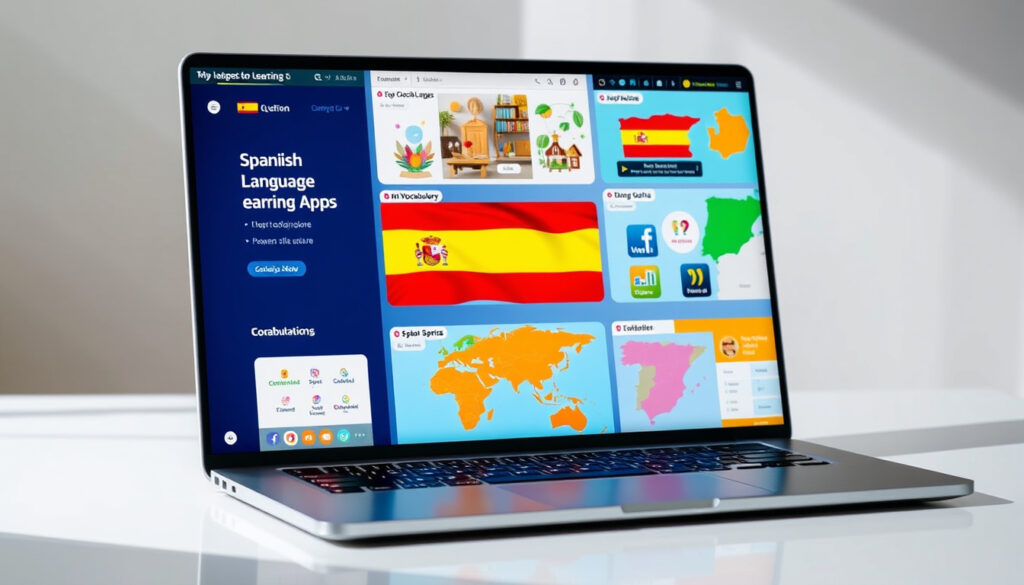
Best Spanish Lessons Online 2024: Top Apps & Courses
Spanish learners abandon platforms mid-course constantly—but the ones who stick usually found the right fit early. This guide cuts through the noise with real picks, Reddit-backed crowds wisdom, and the efficiency tricks that actually work. By the end, you’ll know which program matches your goals, your budget, and your learning style.
Top Value Pick: Rocket Spanish · Most Fun Option: Hotel Borbollón · Grammar Focus: Ouino Spanish · Free Videos Source: Dreaming Spanish · Live Classes: GoSpanish.com
Quick snapshot
- Rocket Spanish delivers best value with one-time purchase, no monthly fees (The Spanish Experiment)
- SpanishPod101 spans beginner to C1 CEFR with 7-day free trial (The Spanish Experiment)
- r/LearnSpanish community has grown to over 1 million members sharing tips (Lingopie)
- Long-term fluency rates vary significantly by individual study habits
- Exact pricing tiers beyond free trials differ by platform
- User success rates from Reddit communities not formally tracked
- Duolingo Spanish course completion review published November 2025 (Alphe’s Corner)
- Fluent Spanish Speaker Academy 90-day claim reviewed in 2024 (Learn Spanish with James)
- Interactive AI conversation tools gaining traction in Reddit communities for 2024
- Live class formats with native tutors remain strongest for spoken fluency
The key facts table below aggregates verified data from top review sites and Reddit community discussions to give you a clear baseline for comparison.
| Label | Value | Source |
|---|---|---|
| Best Value | Rocket Spanish | The Spanish Experiment |
| Grammar Pick | Ouino Spanish | The Spanish Experiment |
| Fun Option | Hotel Borbollón | The Spanish Experiment |
| Live Classes | GoSpanish.com | Community recommendation via Reddit |
| Free Videos | Dreaming Spanish | The Spanish Experiment |
| r/LearnSpanish members | over 1 million | Lingopie |
| Pimsleur lesson length | 30 minutes | The Spanish Experiment |
| SpanishPod101 free trial | 7 days | The Spanish Experiment |
| Hotel Borbollón free trial | 1 month | The Spanish Experiment |
| Hotel Borbollón weekly limit | 4 lessons | The Spanish Experiment |
What is the best online program to learn Spanish?
The answer depends heavily on what you want: a structured grammar foundation, pure conversational practice, or something you can squeeze into a commute. The Spanish Experiment’s 2024 ranking placed Rocket Spanish at the top for overall value, while Hotel Borbollón won for engagement, and Pimsleur dominated for mobile pronunciation work.
Rocket Spanish
Rocket Spanish operates on a one-time purchase model with no monthly fees, making it the most cost-effective option for committed learners (The Spanish Experiment). The program combines Interactive Audio lessons featuring real Spanish dialogues with Language and Culture lessons that break down grammar through audio examples. Reviewers consistently praise it for packing everything into one program that works across multiple learning styles.
A free trial requires no credit card and includes substantial content—useful for testing whether the approach suits you before committing. The interactive audio pauses for user speaking practice, which simulates real conversation better than passive listening alone.
GoSpanish.com
For learners prioritizing live conversation, GoSpanish.com offers 45-minute classes with native tutors multiple times daily, a format Reddit users frequently recommend when asking about live instruction options. The scheduling flexibility and real-time feedback loop address a gap that purely self-paced courses cannot fill.
Instituto Cervantes
Instituto Cervantes, the official Spanish cultural institution, provides accredited courses recognized internationally. While less tech-forward than apps, its structured curriculum and native instructor oversight carry weight for formal progression or professional purposes.
Rocket Spanish wins on value and comprehensiveness. GoSpanish.com wins on live practice. Cervantes wins on institutional credibility. The right choice hinges on whether you’re optimizing for cost, conversation, or credentials.
The implication: match your priority to the platform’s strength—value seekers benefit most from Rocket Spanish’s one-time model, while those prioritizing spoken fluency should invest in live sessions.
Which is better, Babbel or Duolingo for Spanish?
This comparison comes up constantly on Reddit, and the honest answer is that it depends on your goal. Babbel builds toward practical conversation with grammar embedded naturally; Duolingo builds vocabulary through gamification and repetition. A user who completed Duolingo’s Spanish course noted it excelled at vocabulary and reading comprehension, though speaking confidence lagged behind.
Babbel strengths
- Dialogue-based lessons targeting real-world scenarios
- Grammar explanation woven into conversation practice
- Shorter lesson format suits busy schedules
- Designed for practical output, not just recognition
Duolingo strengths
- Free access with generous free tier
- Gamification drives daily streaks effectively
- Large vocabulary coverage through spaced repetition
- Strong community and social features
User drop-off reasons
Both apps suffer from high abandonment rates. Duolingo’s gamification initially hooks users but many quit when the novelty fades without achieving conversational ability. Babbel users sometimes drop off when lessons get repetitive at intermediate levels. Reddit discussions reveal that users who set specific milestones—booking a conversation within 3 months, passing a specific exam—stick with either platform longer.
Duolingo and Babbel serve different masters. Duolingo wins for vocabulary drilling and habit-building. Babbel wins for structured progression toward real conversations. Learners who want both need to layer these tools or move to a comprehensive program once fundamentals lock in.
The pattern: neither app delivers full conversational fluency alone—layering a speaking-focused tool is what bridges the gap between vocabulary mastery and actual speech production.
What is the best online app for learning Spanish?
Beyond the Babbel vs. Duolingo debate, several apps fill specific niches that power users have identified through community testing and expert reviews.
Top apps reviewed
SpanishPod101 stands out with the largest collection of graded audio and video lessons spanning beginner to C1 CEFR, covering Mexican, Peruvian, Costa Rican, and European Spanish varieties (The Spanish Experiment). Its premium tier includes videos, flashcards, and line-by-line audio practice. The 7-day free trial lets learners sample the library before subscribing.
Ouino Spanish takes a non-linear approach, allowing users to hop between lessons focused on verbs, conjugation, and themed vocabulary. Reviewers describe it as software-style learning that’s faster than web-based trials. For learners who know exactly what grammar points they need to drill, this flexibility beats sequential lesson structures.
Free options like Dreaming Spanish
Dreaming Spanish uses the comprehensible input method—exposure to Spanish at a level slightly above current understanding. Its YouTube library and free platform make it accessible without signup friction. The approach draws on research suggesting that massive reading and listening exposure builds fluency more naturally than explicit grammar instruction.
Free platforms like Dreaming Spanish work best for auditory learners with high tolerance for confusion. Paid comprehensive courses like Rocket Spanish or SpanishPod101 trade cost for structure and accountability features that keep more learners on track.
The implication: free apps work for casual learners or those testing the waters, but serious progress typically requires the accountability structure that paid programs provide.
What is the 80 20 rule for learning Spanish?
The Pareto Principle applied to language learning suggests that roughly 20% of vocabulary and grammar covers 80% of daily conversation. Reddit communities and efficiency-focused learners have distilled this into practical hacks.
Pareto Principle application
Instead of memorizing entire dictionary lists, focus on the most frequent words first. The 1,000 most common Spanish words account for roughly 85% of everyday speech, according to frequency analysis from linguistic databases. Pair this with high-frequency verb conjugations (ser, estar, tener, hacer, ir) to unlock most routine conversations.
Super 7 verbs explained
The “Super 7” or “Core 7” approach popularized in language learning communities focuses on seven high-utility Spanish verbs: ser, estar, tener, hacer, ir, querer, poder. Mastering conjugation patterns for these verbs covers the functional backbone of Spanish conversation faster than any vocabulary flashcard deck. Apps like Pimsleur naturally emphasize verbs and practical phrases over isolated word lists.
Talkpal AI, recommended by Reddit users in 2024, uses conversational AI to practice these patterns in realistic dialogues, gamifying the process without the gamification overload that causes Duolingo fatigue.
The 80/20 rule works brilliantly for reading and listening comprehension. Speaking and writing require productive vocabulary that frequency lists deprioritize. Learners who master the shortcuts for input still need targeted practice for output—the gap where most self-taught learners stall.
The implication: frequency-based learning accelerates input skills dramatically, but productive output requires dedicated speaking practice that frequency lists cannot replace.
Can I become fluent in 3 months in Spanish?
The short answer is no, not in the way most people imagine fluency. The longer answer is more nuanced: you can achieve conversational competence for specific contexts within 90 days if you commit serious daily hours with the right tools.
Realistic timelines
Fluent Spanish Speaker Academy claims fluency in 90 days through interactive learning and conversations (Learn Spanish with James), and its user-friendly design with clear progression earns praise in reviews. However, “fluency” in marketing terms often means basic conversation ability, not native-level proficiency. The US Foreign Service Institute estimates Spanish requires approximately 600 classroom hours for general professional proficiency—a figure that accounts for Spanish being a Category I language for English speakers.
Babbel fluency claims
Babbel markets its courses toward practical conversation rather than formal fluency. Users report that completing the full course delivers solid intermediate ability with emphasis on spoken communication. The structured lesson paths prevent the aimlessness that causes most app abandonment.
90-day fluency promises sell courses, but they rarely deliver native-like ability. Learners who set realistic sub-goals—holding a 5-minute conversation, understanding a news segment, reading a menu fluently—achieve them consistently. Those chasing the “fluent” label often burn out chasing a moving target.
The implication: set milestone-based goals rather than chasing the “fluent” label—5-minute conversations and menu-reading competence are achievable within months, while native-level proficiency requires years of consistent practice.
The comparison table below breaks down each platform across five key dimensions to help you narrow your choice based on your priorities.
| Platform | Best For | Cost Model | Free Trial | Dialect Coverage |
|---|---|---|---|---|
| Rocket Spanish | Value and comprehensive learning | One-time purchase | Yes, no credit card | General |
| Hotel Borbollón | Engagement and story-based immersion | Subscription | 1 month | European Spanish |
| SpanishPod101 | Audio library with dialect options | Subscription | 7 days | Mexican, Peruvian, Costa Rican, European |
| Duolingo | Vocabulary and habit building | Free tier / Plus subscription | Free tier | General |
| Pimsleur | Pronunciation and mobile learning | Subscription | Varies | General |
| Dreaming Spanish | Comprehensible input method | Free | Full free access | General |
Upsides
- Rocket Spanish offers one-time pricing with no monthly commitment
- SpanishPod101 covers six CEFR levels with dialect-specific paths
- Dreaming Spanish provides free comprehensible input without signup friction
- GoSpanish.com delivers live conversation practice with native tutors
- r/LearnSpanish community offers peer support and resource sharing
Downsides
- Duolingo and Babbel both show high user drop-off rates at intermediate levels
- Hotel Borbollón limits users to 4 lessons per week regardless of subscription tier
- 90-day fluency claims from some platforms overstate realistic outcomes
- Free platforms lack the structure that keeps many learners accountable
- Live tutoring platforms like GoSpanish.com require scheduling and higher cost
Community insights and real user experiences
The largest Reddit community for Spanish learners, r/LearnSpanish, has grown to over 1 million members sharing resources, tips, and honest critiques of platforms they’ve tried (Lingopie). Redditors connect with Spanish speakers worldwide for practice exchanges, recommend specific subreddits for dialect focus, and warn each other about courses with aggressive upselling.
The Spanish Experiment reviewer described Rocket Spanish as successfully packing everything plus the kitchen sink into one program.
— The Spanish Experiment (Independent Reviewer)
Hands down the best source of Spanish audio lessons.
— The Spanish Experiment (Independent Reviewer, on SpanishPod101)
There is no doubt in my mind that you can achieve fluency in just 90 days.
— James, Learn Spanish with James
Related reading: best picks for portable induction cooktops · best women’s long puffer jackets
While evaluating Rocket Spanish versus Babbel and Duolingo, top picks for 2025 highlight balanced choices suiting different budgets and goals.
Frequently asked questions
What are the best Spanish lessons online for beginners?
Rocket Spanish, SpanishPod101, and Duolingo all offer structured beginner pathways. Rocket Spanish provides a free trial with substantial content, SpanishPod101 spans beginner to C1 CEFR with 7-day free access, and Duolingo’s free tier covers beginner vocabulary effectively. Dreaming Spanish offers comprehensible input content specifically designed for beginners at no cost.
What are the best free online Spanish lessons?
Dreaming Spanish offers the most comprehensive free library using the comprehensible input method. SpanishPod101 provides 7-day free access to initial lessons. Duolingo’s free tier remains the most robust free option overall, though it limits streak repair and advanced features behind its Plus subscription.
What is the best Spanish learning program for adults?
For adults seeking structured progression without gamification overload, Rocket Spanish and Babbel rank highest. Rocket Spanish’s one-time purchase suits adult budgets avoiding subscription fatigue. Babbel’s dialogue-based lessons target practical adult scenarios. SpanishPod101’s audio focus suits commuters and audio-preferred learners.
Are there virtual Spanish classes for adults online?
Yes. GoSpanish.com offers live 45-minute classes with native tutors multiple times daily—frequently recommended in Reddit threads for adult learners prioritizing conversation. Instituto Cervantes provides accredited virtual courses with native instructor oversight for formal progression needs.
What is Rocket Spanish?
Rocket Spanish is a comprehensive online Spanish course featuring Interactive Audio lessons with speaking practice, Language and Culture lessons explaining grammar, and one-time purchase pricing without monthly fees. It ranks as the top value pick in 2024 reviews for all-in-one coverage from beginner to intermediate level.
Why do people stop using Duolingo?
Duolingo users most commonly quit due to the gap between vocabulary drilling and actual conversation ability. Gamification initially hooks users but excitement fades when learners realize they’re memorizing words without building sentences. Many Reddit users report completing the tree without feeling prepared to speak. High streak requirements also create anxiety that drives abandonment.
Is Babbel better than Duolingo for fluency?
Babbel edges Duolingo for conversation-focused fluency because its lessons embed grammar in dialogues targeting real-world scenarios. Duolingo excels at vocabulary acquisition and habit-building through gamification. For practical conversation ability, Babbel’s structured approach delivers better results. For vocabulary breadth and daily engagement, Duolingo wins. Most effective learners use both for different purposes.
More related posts
 Sabrina Carpenter Perfume NZ – Availability and Prices Guide
 New Balance Buy Online – Best Places for Authentic Shoes
 Bed Base with Storage – Sizes, Reviews and Buying Guide
 Ear Wax Removal Near Me: Costs, Methods & Local Clinics
 Eminem Happy Gilmore 2 Cameo: Role, Pay & Sandler Friendship
 Trade Me Property for Sale Christchurch: 2025 Guide
 Te Anau New Zealand Travel Guide: Gateway to Fiordland
 Free Dogs to Good Homes NZ: Adopt or Rehome Safely