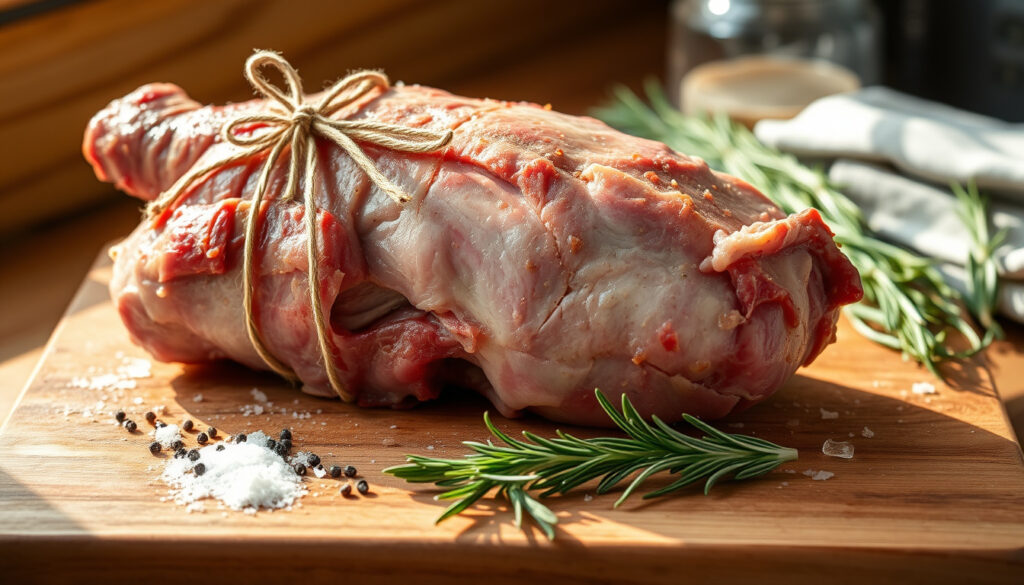
Pork Shoulder Roast Recipe: Methods, Time & Tips
You know that feeling when a pork shoulder roast comes out of the oven with impossibly crackling skin and meat that pulls apart like butter? That’s the goal. This guide breaks down the oven, slow cooker, and smoker methods, the exact temperatures that deliver tender results, and the most common mistakes to avoid — so your next roast is the one everyone remembers.
Ideal internal temperature for shredding: 195–205°F ·
Average cook time at 250°F: 4 to 7 hours ·
Popular cooking method: Low and slow oven roasting ·
Critical step for crispy crackling: Dry skin + high initial heat
Quick snapshot
- Low and slow cooking tenderizes collagen and yields fork-tender meat (USDA food safety guidance)
- Internal temperature of 195–205°F is needed for shredding (Lombardi’s Prime Meats cooking info)
- Crackling requires dry skin and high heat to start (Dad Cooks Dinner)
- Exact cooking time varies by oven calibration and meat thickness (Lombardi Brothers Meats cooking chart)
- Ideal resting time may vary by recipe preference (A Cedar Spoon recipe)
- In 2011, USDA updated safe pork temperature from 160°F to 145°F with a 3-minute rest (The Forked Spoon)
- After reaching internal temp, rest 20–30 minutes before slicing or shredding (Jamie Oliver)
The table below consolidates the key numbers for cooking pork shoulder.
| Fact | Value |
|---|---|
| Best internal temperature for shredding | 195–205°F |
| Cooking time per pound at 225°F | 1.5 hours |
| Crackling secret | Dry skin, salt, high initial heat (450°F for 20–30 min) |
| Most popular method in SERP | Oven roasting with crackling |
| Safe pork temperature (USDA) | 145°F + 3 min rest |
| Slow cooker time (low) | 8–12 hours depending on size |
How to cook the perfect roast pork shoulder?
Choosing the right cut
Pork shoulder is sold either as Boston butt (top shoulder) or picnic shoulder (lower, with skin). Both work, but the butt is more marbled and forgiving. The National Pork Board recommends using a digital thermometer because “timing alone can be deceiving” (National Pork Board temperature guide).
Preparing the pork shoulder
Pat the skin bone-dry with paper towels. Score the skin in a diamond pattern if you want extra crackling. For deep flavor, dry-brine overnight with salt — the salt draws out moisture, then gets reabsorbed. The USDA states that fresh pork is safe at 145°F, but for pulled texture you need 195–205°F.
Seasoning for flavor
Salt is non-negotiable. Add garlic powder, black pepper, fennel seed, or a spice rub. The Rising Spoon recipe for a 4-pound bone-in shoulder uses a simple garlic-herb paste (The Rising Spoon recipe).
Roasting technique
Start at 450°F for 20–30 minutes to blister the skin, then drop to 250°F for the remainder. Dad Cooks Dinner roasts a 4-pound shoulder in a Dutch oven for about 5 hours at 300°F and notes that the covered pot retains moisture. For classic oven roasting without cover, count on 45–75 minutes per pound at 350°F according to a Lombardi Brothers Meats chart.
Resting and serving
Rest the roast uncovered for 20–30 minutes. This lets juices redistribute. If you pulled the pork at 200°F internal, the carry-over heat will nudge it toward 205°F — exactly where collagen melts into gelatin.
Oven roasting delivers the crackling that slow cookers can’t produce, but it demands more attention. For set-and-forget meals, a slow cooker wins on convenience — just don’t expect crispy skin.
Which is the best cooking method for a pork shoulder?
Oven roasting
Gives you both crust and control. High heat starts the crackling; low heat finishes the meat. Nom Nom Paleo’s recipe uses a slow cooker instead, which is the opposite end of the spectrum (Nom Nom Paleo slow cooker recipe). The oven method is best if you’re aiming for crackling plus moist meat.
Slow cooker method
Set it and forget it. A 3-pound boneless roast on low needs 10–12 hours, says A Cedar Spoon. The Rising Spoon notes that a 7- to 8-pound shoulder can take 10–12 hours on low. High heat takes 4–6 hours per Grassroots Coop (Grassroots Coop braised pork shoulder). The trade-off: no crackling.
Smoking pork shoulder
Smoking at 225–250°F for 8–14 hours yields deep smoke rings. The longer cook time breaks down collagen thoroughly. But you need a smoker and patience. No crackling here either.
Pressure cooker option
Fastest by far — an Instant Pot can cook a 3-pound shoulder in about 90 minutes. But you lose browning and crackling completely. If you’re short on time, it’s a fallback, not a priority.
Four methods, one pattern: oven roasting maximizes crackling and control; slow cookers maximize convenience; smokers maximize flavor; pressure cookers maximize speed. Choose based on your priority.
Home cooks who want crackling are locked into oven roasting. Those who prioritize tenderness above all else can rely on any method — but only the oven gives you that audible crunch.
If you’re cooking for a holiday dinner, the crackling is the star. A slow cooker may produce juicy meat, but without the dramatic crackling, the dish loses its centrepiece effect.
The pattern: each method trades off texture and effort; choose based on which outcome matters most.
The table below compares core trade-offs across methods.
| Method | Crackling | Cook time (4 lb) | Effort |
|---|---|---|---|
| Oven roasting | Yes | 4–5 hours at 250°F | Medium |
| Slow cooker | No | 8–10 hours on low | Very low |
| Smoker | No | 8–14 hours at 225°F | High |
| Pressure cooker | No | 90 minutes | Low |
How long do I need to cook a pork shoulder roast?
Cooking time by method
Oven at 250°F: about 1.5 hours per pound. Slow cooker on low: 8–10 hours for a 3-pound roast, says A Cedar Spoon. For a 7–8 pound shoulder, The Rising Spoon says 10–12 hours.
Cooking time by weight
A Lombardi Brothers Meats chart suggests 45–75 minutes per pound at 350°F. At 250°F you need more time — roughly 60–90 minutes per pound.
How to tell when it’s done
Never rely on time alone. Use an instant-read thermometer. The National Pork Board stresses that a digital cooking thermometer is the only reliable method. For tender shreds, aim for 195–205°F. For safety, 145°F is enough — but the texture won’t be pullable.
The catch: time estimates are guidelines; your thermometer is the only judge.
Do you cover a pork shoulder when cooking in the oven?
Benefits of covering
Covering traps steam and keeps the meat moist — great for pulled pork. Dad Cooks Dinner uses a Dutch oven lid for most of the cook and says it retains moisture better than uncovered roasting.
When to cook uncovered
Uncovered for the first 20–30 minutes at high heat to crisp the skin. Then you can optionally cover for the remaining cook time if you want extra moisture. Otherwise, stay uncovered for maximum crackling.
The 6-2-2 rule explained
Some cooks use a 6-2-2 pattern: 6 hours uncovered at 225°F, 2 hours covered, then 2 hours resting in a warm oven. It’s an approximation — your oven’s thermostat will shift the numbers.
What are common mistakes when cooking pork roast?
Not using a meat thermometer
Many home cooks guess by time. That’s why dry or undercooked pork shoulder happens so often. The USDA and National Pork Board both strongly recommend a digital thermometer.
Skipping the rest period
Resting 20–30 minutes after cooking lets juices redistribute. Without rest, slicing releases juices onto the cutting board instead of staying in the meat.
Overcooking or undercooking
Over 210°F and the meat dries out. Under 190°F and it’s tough. The sweet spot for shredding is 195–205°F. A good thermometer prevents both extremes.
Insufficient seasoning
Pork shoulder is a big piece of meat — skimping on salt and spice leaves it bland. Season generously the night before.
Neglecting the crackling
Crackling fails when the skin isn’t dry or the oven isn’t hot enough. Start at 450°F for 20 minutes, pat the skin dry with paper towels, and score it for expansion.
Even the best crackling can soften if you cover the meat for the last hour. If crackling is your priority, never cover — trade a little moisture for a lot of crunch.
The pattern: most mistakes come from skipping thermometers or resting; the fix is simple and consistent.
Step-by-step summary: from fridge to fork
- Prep: Pat skin dry, score, season with salt and spices. Refrigerate overnight if possible.
- Preheat oven to 450°F. Place pork shoulder fat/skin side up on a rack in a roasting pan.
- High-heat start: Roast uncovered at 450°F for 20–30 minutes until skin blisters.
- Lower heat: Reduce oven to 250°F. Continue roasting until internal temp reaches 195–205°F (about 1.5 hours per pound).
- Rest: Let shoulder rest uncovered for 20–30 minutes.
- Serve: Pull apart with forks or slice. For crackling, break into shards.
What this means: the sequence guarantees crackling and tenderness; rushing any step costs texture.
Confirmed facts
- Low and slow cooking tenderizes collagen and yields fork-tender meat (USDA)
- Internal temperature of 195–205°F is needed for shredding (Dad Cooks Dinner)
- Crackling requires dry skin and high heat to start (Jamie Oliver)
- USDA safe pork temperature is 145°F + 3 min rest (USDA)
What’s unclear
- Exact cooking time varies by oven calibration and meat thickness (Lombardi Brothers Meats chart)
- Ideal resting time may vary by recipe preference (A Cedar Spoon)
- 6-2-2 rule is an approximation, not a guarantee (The Forked Spoon)
Expert perspectives
“Low and slow, that’s the key. Six hours at a low temperature makes the pork beautifully tender.”
“For really crisp crackling, make sure the skin is very dry and rub in a generous amount of sea salt.”
— BBC Good Food, BBC Good Food easy roast pork shoulder with crackling
The verdict: both experts agree on low heat and dry skin; the methods converge on the same principles.
Summary
Pork shoulder rewards patience. The oven method gives you crackling that a slow cooker can never match, but both turn collagen into butter if you hit 195–205°F. For home cooks planning a Sunday roast, the choice is clear: roast uncovered, start hot, finish low, and rest well — or buy a slow cooker and skip the crackling altogether.
Related reading: **Chicken Stir Fry NZ – Quick & Easy Recipe**
Frequently asked questions
What is the best pork shoulder cut for roasting?
Boston butt (top shoulder) is more marbled and forgiving; picnic shoulder (lower, with skin) works well if you want crackling. Both benefit from low and slow cooking.
Can I cook pork shoulder from frozen?
Yes, but expect 50% longer cook time. It’s safer to thaw fully before cooking for even temperature throughout.
How to reheat leftover pork shoulder without drying it out?
Reheat in a covered dish with a splash of broth at 300°F for 15–20 minutes, or in a microwave with a damp paper towel.
What sides go best with pork shoulder roast?
Roasted potatoes, braised greens, apple sauce, or a simple coleslaw balance the richness.
How to make pulled pork from a pork shoulder roast?
Cook until internal temp 195–205°F, then shred with two forks. Mix with your favorite barbecue sauce.
Can I use pork shoulder for carnitas?
Absolutely. Cook with orange juice, garlic, and bay leaves, then crisp chunks under the broiler.
More related posts
 Chicken Stir Fry NZ – Quick & Easy Recipe
 SPCA Auckland (Mangere) Adoption: Process, Fees & Location
 How to Find the Circumference of a Circle – Formulas and Examples
 Harbour View Motel Napier: Reviews, Prices, Phone & More
 Seek Jobs Palmerston North: Compare Top Job Sites
 What Time is Taco Tuesday in Steal a Brainrot? Full Schedule