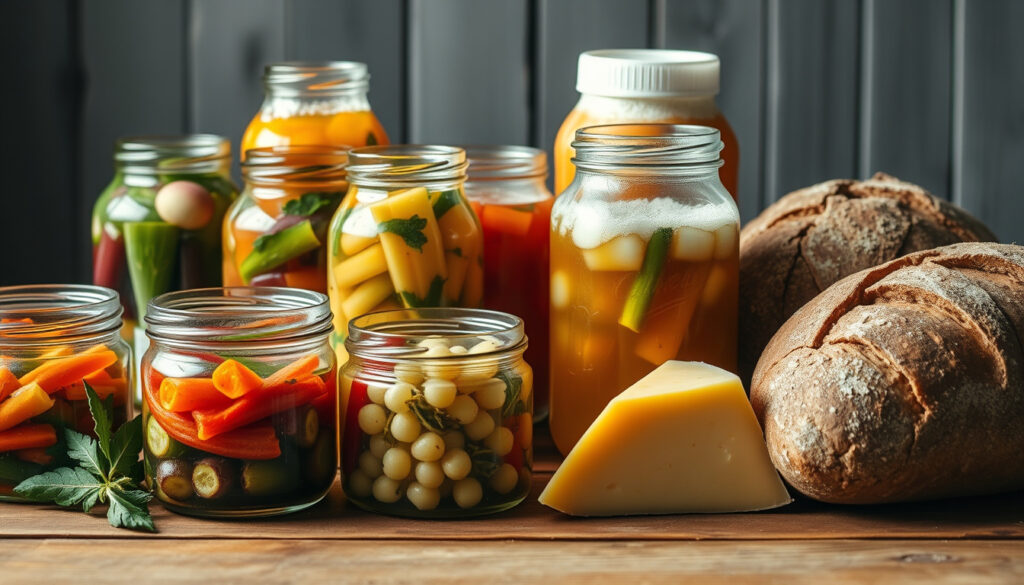
What Is a Fermented Food? Definition and Examples
You’ve probably seen jars of tangy kimchi, spooned Greek yogurt into a smoothie, or sipped bubbly kombucha — but what actually makes a food “fermented”? It’s not just about a sour taste or a long shelf life. The official definition hinges on controlled microbial growth, and that distinction shapes everything from the health benefits you can expect to the histamine load that might affect you.
Fermented foods defined: Foods made through controlled microbial growth and enzymatic conversion of components. ·
Global variety: Thousands of traditional fermented foods exist worldwide, including yogurt, kimchi, sauerkraut, kefir, tempeh, and miso. ·
Gut health impact: Regular consumption is linked to increased gut microbiome diversity and reduced inflammation. ·
Histamine content: Many fermented foods naturally contain high levels of histamine, which can trigger reactions in sensitive individuals.
Quick snapshot
- Fermented foods are defined by controlled microbial growth (Stanford Medicine Nutrition)
- Not all fermented foods are probiotic (Stanford Medicine Nutrition)
- Greek yogurt is a fermented food (Stanford Medicine Nutrition)
- Exact ranking of “healthiest” fermented food is subjective (Stanford Medicine Nutrition)
- Whether pasteurized “fermented” foods offer same gut benefits is debated (Stanford Medicine Nutrition)
- “Super six” list is based on single expert opinion, not consensus guideline (Bulletproof)
- Histamine levels increase with fermentation time (WebMD)
- Sauerkraut’s histamine concentration is high compared with other foods (WebMD)
- Aged cheese can trigger histamine poisoning outbreaks (PubMed review: Biogenic Amines in Cheese)
- Introduce fermented foods slowly to avoid bloating (Stanford Medicine Nutrition)
- Histamine-sensitive individuals should consult a provider before regular consumption (Stanford Medicine Nutrition)
- Pasteurized versions may be safer for immunocompromised people (Stanford Medicine Nutrition)
Four key facts, one pattern: what defines a fermented food is the process, not the label.
The definition gets applied unevenly, which is why a table of core distinctions helps separate genuine fermentation from imitations.
| Label | Value |
|---|---|
| Definition | Foods made through controlled microbial growth and enzymatic conversion of components. |
| Microbial presence | Live microbes are present in traditionally fermented products; pasteurized versions may lack them. |
| Histamine note | Histamine levels increase with fermentation time; sensitive individuals should choose short-fermented options. |
| Yogurt status | Greek yogurt is fermented; straining does not remove live cultures. |
| Probiotic claim | Not all fermented foods are probiotic; not all probiotics are fermented foods (Stanford Medicine Nutrition). |
| Pickled vs fermented | Many shelf-stable pickled products are acidified with vinegar, not truly fermented (Stanford Medicine Nutrition). |
What are examples of fermented food?
Fermented foods span nearly every grocery aisle. Stanford Medicine Nutrition defines them as foods produced through controlled microbial growth — bacteria or yeast — that transform ingredients and create new compounds affecting taste, preservation, and digestion.
Yogurt and kefir
- Yogurt: produced by Lactobacillus fermentation of milk. Greek yogurt undergoes straining but retains live cultures.
- Kefir: contains up to 30 species of bacteria and yeasts, giving it broader microbial diversity than yogurt (Stanford Medicine Nutrition).
- Products labelled with “live and active cultures” guarantee at least 100 million cultures per gram at manufacture.
Kimchi and sauerkraut
- Kimchi: fermented vegetables (typically napa cabbage and radish) with Lactobacillus and beneficial fiber.
- Sauerkraut: shredded cabbage fermented by lactic acid bacteria. Genuinely fermented versions require refrigeration and do not list vinegar among ingredients (Stanford Medicine Nutrition).
- Sauerkraut is specifically identified as containing a high concentration of histamine compared with other common foods (WebMD).
Miso and tempeh
- Miso: fermented soybean paste, rich in protein, vitamin K, and manganese.
- Tempeh: whole soybeans bound by Rhizopus mold into a firm cake, providing protein and fiber.
- Both can contain biogenic amines including histamine (PubMed review: Biogenic Amines in Cheese and other Fermented Foods).
Kombucha
- Fermented sweetened tea using a symbiotic culture of bacteria and yeast (SCOBY).
- Live probiotics present in unpasteurized versions; commercial brands are often pasteurized, reducing microbial content.
Sourdough bread
- Leavened by wild yeast and lactobacilli rather than commercial baker’s yeast.
- Fermentation breaks down some gluten and phytates, but cooking kills live microbes — so sourdough is a fermented food but not probiotic.
A shelf-stable jar of pickles labeled “pickles” is not fermented — it’s acidified. A refrigerated jar labeled “fermented pickles” with no vinegar on the ingredients list is the real thing. The distinction matters because the live microbes are what confer gut health benefits (Stanford Medicine Nutrition).
The pattern across all examples: every genuinely fermented food depends on controlled microbial growth, not on added acid or heat processing.
Which is the healthiest fermented food?
No single food is universally the healthiest. The benefits depend on bacterial strains, processing methods, and an individual’s health goals (Stanford Medicine Nutrition). But three contenders regularly top the list.
Kefir leads in microbial diversity
- Kefir grains contain up to 30 species of bacteria and yeasts — a broader range than yogurt.
- Regular consumption is linked to increased gut microbiome diversity and reduced inflammation.
Kimchi offers multiple bacterial strains
- Provides Lactobacillus species along with beneficial fiber from vegetables.
- Spices like garlic and ginger add anti-inflammatory compounds.
Miso provides protein and vitamins
- Rich source of protein, vitamin K, and manganese.
- Fermentation breaks down soy proteins, making nutrients more bioavailable.
The “healthiest” choice for someone with histamine intolerance is a short-fermented food like fresh yogurt rather than aged cheese or long-fermented sauerkraut. The runner with no sensitivities might benefit more from kefir’s microbial diversity. Your health context determines the answer.
The trade-off: kefir offers the most microbial diversity but may trigger bloating in people with irritable bowel syndrome (IBS) due to its live yeast content. Kimchi’s fiber and spices are gut-friendly but its long fermentation raises histamine levels.
Is fermented food high in histamine?
Many fermented foods are naturally high in histamine — and for a subset of people, that’s a problem. WebMD lists aged cheese, yogurt, sour cream, buttermilk, kefir, sauerkraut, kimchi, pickles, kombucha, cured meats, wine, beer, soy sauce, tempeh, miso, natto, and sourdough bread as high-histamine foods.
Histamine production during fermentation
- Histamine is a biogenic amine produced by bacteria during fermentation.
- Levels vary by fermentation time, temperature, and bacterial species (WebMD).
- Longer fermentation generally produces more histamine.
Foods with highest histamine levels
- Aged cheese and sauerkraut rank among the highest.
- PubMed review: Biogenic Amines in Cheese and other Fermented Foods notes that histamine can be associated with outbreaks of histamine poisoning even in cheese, not just in scombroid fish.
Symptoms for sensitive individuals
- Some people experience nausea, bloating, hives, or brain fog after fermented foods (Bulletproof).
- Stanford Medicine Nutrition advises people with histamine intolerance or certain gut conditions to consult a healthcare provider before consuming fermented foods.
If you’ve been told fermented foods are universally healthy and you feel unwell after eating them, histamine intolerance may be the hidden cause. Short-fermented options (fresh yogurt, quick-fermented vegetables) produce less histamine than long-aged ones (aged cheese, long-fermented sauerkraut).
The implication: “fermented” is not a free pass. For histamine-sensitive individuals, the type and duration of fermentation matter more than the category label.
Does Greek yogurt count as a fermented food?
Yes — Greek yogurt is fermented because it is produced by bacterial fermentation of milk. Straining removes whey but does not eliminate live cultures (Stanford Medicine Nutrition).
Yogurt production involves Lactobacillus fermentation
- Milk is inoculated with Lactobacillus bulgaricus and Streptococcus thermophilus.
- Bacteria convert lactose to lactic acid, thickening the milk and creating the characteristic tang.
Greek yogurt undergoes straining but retains live cultures
- Straining removes whey (liquid), concentrating protein and creating a thicker texture.
- Live cultures remain in the strained product.
Labelling requirements for “live and active cultures”
- Products labelled with “live and active cultures” guarantee at least 100 million cultures per gram at manufacture.
- Pasteurized yogurt (heat-treated after fermentation) kills the cultures — it remains a fermented food but loses probiotic status.
The pattern: straining is a mechanical step, not a chemical one. As long as the yogurt isn’t heat-treated after fermentation, it retains both its fermented identity and its live microbes.
Who should not eat fermented foods?
Fermented foods are beneficial for most, but three groups should approach them with caution.
Histamine intolerance
- People with histamine intolerance may experience headaches, rashes, or digestive upset after eating high-histamine fermented foods.
- Healthline lists foods commonly high in histamine, including aged cheese, yogurt, kefir, sauerkraut, kimchi, kombucha, cured meats, and wine.
- Short-fermented options (fresh cheese, young sauerkraut) may be tolerated better.
Immunocompromised individuals
- Live microbes in unpasteurized fermented foods can pose infection risk for people with weakened immune systems.
- Pasteurized versions — which lack live cultures but retain some fermented characteristics — may be safer.
Those with certain digestive disorders
- People with IBS may experience bloating or gas from fermented foods due to fiber and live microbes.
- Stanford Medicine Nutrition recommends introducing fermented foods slowly because too much too quickly may cause bloating or digestive discomfort.
For the healthy adult, the gut benefits of fermented foods outweigh the risks. For the histamine-intolerant individual, the same foods that boost microbiome diversity can trigger inflammation. For the immunocompromised, the choice is between avoiding live cultures or choosing pasteurized versions. There is no one-size-fits-all answer.
The implication: the same microbial activity that makes fermented foods valuable for gut diversity also makes them problematic for specific populations. Knowing which group you fall into determines whether fermented foods are medicine or trigger.
Key perspectives from experts
“Fermentation is a food-processing method in which microorganisms such as bacteria or yeast transform ingredients and can create new compounds that affect taste, preservation, and digestion.”
Stanford Medicine Nutrition
“Not all fermented foods are probiotics, and not all probiotics are fermented foods.”
Stanford Medicine Nutrition
“Fermented foods such as wine, dry sausage, sauerkraut, miso, and soy sauce can contain histamine and other biogenic amines.”
PubMed review: Biogenic Amines in Cheese and other Fermented Foods
A fermented food is not simply a food that tastes sour or has a long shelf life. It is a food transformed by controlled microbial growth — bacteria or yeast — that creates new flavors, improves digestibility, and introduces live microbes. For the healthy adult looking to improve gut diversity, fermented foods offer a well-supported tool. For the histamine-sensitive person or the immunocompromised individual, the choice is clear: select short-fermented or pasteurized options, or avoid them entirely.
Among the most popular examples is the fermented dairy beverage kefir, a tangy and effervescent drink made from milk and kefir grains.
Frequently asked questions
What is the difference between fermented and pickled foods?
Fermented foods rely on live bacteria or yeast to transform ingredients, while many shelf-stable pickled products are acidified with vinegar rather than truly fermented (Stanford Medicine Nutrition). Fermented pickles require refrigeration and do not have vinegar on the ingredients list.
Can fermented foods help with weight loss?
Some research suggests fermented foods may support weight management by improving gut microbiome diversity and reducing inflammation, but no single food guarantees weight loss. The evidence is strongest for yogurt and kefir in the context of a balanced diet (Stanford Medicine Nutrition).
How much fermented food should I eat per day?
Stanford Medicine Nutrition recommends introducing fermented foods slowly — start with one serving (about ½ cup) per day — and increase gradually to avoid bloating or digestive discomfort.
Are all fermented foods probiotic?
No. “Not all fermented foods are probiotics, and not all probiotics are fermented foods,” according to Stanford Medicine Nutrition. Pasteurized fermented foods (like shelf-stable miso or heat-treated yogurt) have live microbes killed during processing and do not provide probiotic benefits.
Can I eat fermented foods while pregnant?
Pasteurized versions of fermented foods are generally safe during pregnancy. Unpasteurized fermented foods carry a small risk of listeria or other pathogens. Pregnant women should consult their healthcare provider before consuming unpasteurized fermented products.
Do fermented foods need to be refrigerated?
Truly fermented foods typically require refrigeration because they contain live, active cultures that continue to ferment at room temperature. Shelf-stable “pickles” or “fermented” products that do not require refrigeration are likely acidified with vinegar, not fermented (Stanford Medicine Nutrition).
What is the best time to eat fermented foods for gut health?
There is no single “best” time. The most important factor is consistency — regular, moderate consumption rather than occasional large amounts. Some people find fermented foods easier to digest when eaten with meals rather than on an empty stomach (Stanford Medicine Nutrition).
More related posts
 Valentino Born in Roma Intense: Scent, Price & Comparison
 Milk and Honey Napier: Menu, Reviews & Beachfront Dining
 Ice Ice Baby Timaru: Menu, Hours & Delivery on Stafford
 Bed Base with Storage – Sizes, Reviews and Buying Guide
 Where to Sell Outdoor Furniture: Top Irish Platforms Compared
 The Sands Hotel Hokianga: Beachfront, Prices, Menu & Contact
 What Time is the All Blacks Game? Kickoff Times & TV Guide
 New Zealand Driver Licence: How to Get One in 2026