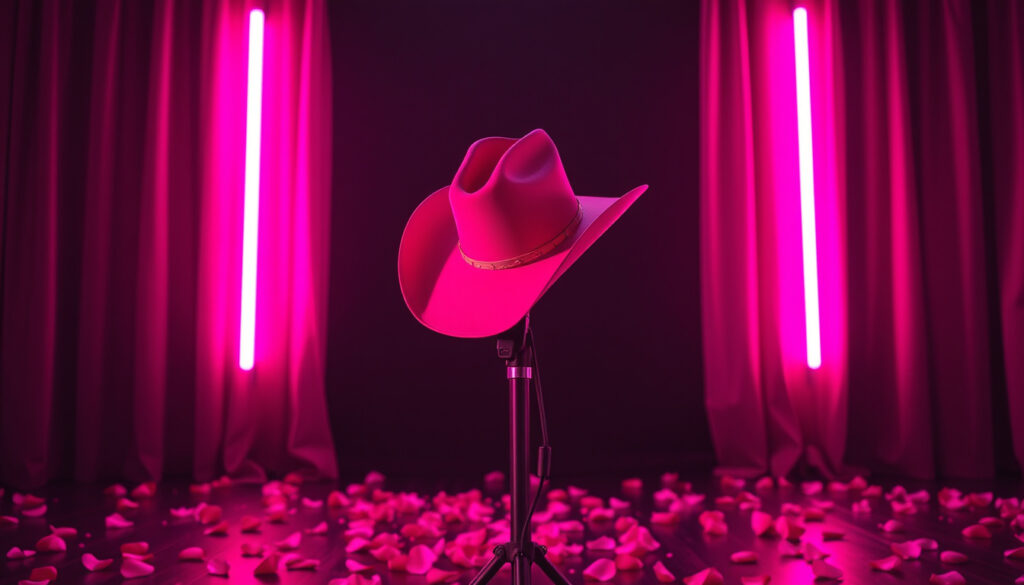
Pink Pony Club Meaning: Queer Anthem & Real Inspirations
Few songs capture the feeling of leaving a small town for a place where you can truly be yourself quite like Chappell Roan’s “Pink Pony Club.” Released in April 2020, the track has become an anthem for queer self-acceptance, but its title has left many wondering: is there actually a Pink Pony Club? We unpack the meaning behind the song and how a real strip club in Atlanta and a West Hollywood gay bar came together to create a fictional safe space that resonates with millions.
Release date: April 3, 2020 ·
Artist: Chappell Roan ·
Label: Atlantic Records ·
Length: 3 minutes 42 seconds ·
Songwriter: Chappell Roan and Dan Nigro
Quick snapshot
- “Pink Pony Club” was released on April 3, 2020 Wikipedia article
- The song later appeared on Roan’s debut album “The Rise and Fall of a Midwest Princess” (2023) (Wikipedia) (Wikipedia article)
- Roan says the song is about “going out and queerness” wikiHow article
- Out magazine calls it a “magical place” where the singer can be herself Out magazine article
- Whether the Pink Pony Club is a real venue in Los Angeles — Out says there is no gay bar or club by that name in LA (Out magazine article)
- The exact degree to which Roan intended the song as a metaphor for queer liberation vs. simply a personal story
- How much the song’s commercial success was boosted by the 2025 Grammys — it charted five years after release (Wikipedia article)
- Whether the local strip club in Springfield was actually named “Pink Pony”
- 2018: Roan visits The Abbey, a West Hollywood gay bar, sparking the song (Wikipedia article)
- April 3, 2020: Song released during the COVID-19 lockdown (wikiHow article)
- 2025: Roan wins Best New Artist at Grammys; song re-enters charts (Wikipedia article)
- Continued growth as a pride anthem at LGBTQ events and drag performances
- Possibility of a live tour or special performance tied to the song’s legacy
- Further analysis from music critics and queer studies scholars
Below is a quick reference of key facts about “Pink Pony Club.”
| Label | Value |
|---|---|
| Release date | April 3, 2020 (Wikipedia article) |
| Artist | Chappell Roan |
| Label | Atlantic Records |
| Length | 3 minutes 42 seconds |
| Songwriter(s) | Chappell Roan, Dan Nigro |
| Album | The Rise and Fall of a Midwest Princess (2023) (Wikipedia article) |
| Genres | Pop, synth-pop, dance-pop, power pop, disco (Wikipedia article) |
| Inspiration | The Abbey (West Hollywood) + a local strip club in Springfield, Missouri (Wikipedia article) |
What is the Pink Pony Club based on?
A real strip club in Atlanta and a West Hollywood gay bar
- Roan has said the fictional Pink Pony Club was inspired by a local strip club near her former hometown of Springfield, Missouri, described as being “all hot pink” (Wikipedia article).
- The song’s setting, however, is Southern California: the lyrics place the club in West Hollywood, and Roan has credited a visit to The Abbey, a famous gay bar in West Hollywood in 2018, as the trigger for writing the track (Wikipedia article).
- No actual gay bar or club called “Pink Pony Club” exists in Los Angeles, according to Out magazine article — the name is a composite.
The implication: the Pink Pony Club is not a place you can find on a map. It’s an emotional destination, stitched together from real experiences and a dash of fantasy.
How Chappell Roan transformed the location into a metaphor
- Roan has said the song is “for going out and queerness” (wikiHow article).
- Out magazine interprets the club as a “magical place” where the singer can be herself and feel free from a strict upbringing (Out magazine article).
- SVARA, a Jewish learning community, argues that the song is “a queer song written by a queer artist about a queer right-of-passage” (SVARA article).
- The refrain “I’m just having fun” is read by commentators as a statement of self-ownership in the face of parental disapproval (Out magazine article).
Why this matters: the club becomes a stand‑in for every queer person’s search for a space where they can drop the mask — a metaphor that lands hardest on those who’ve had to leave home to find it.
Is the Pink Pony Club LGBTQ?
The song is overwhelmingly embraced by the LGBTQ community as an anthem of pride and self‑acceptance. Out magazine calls the Pink Pony Club a “queer fantasy” and a celebration of queer joy. SVARA describes it as a “journey of transformation central to queer experience.” Even wikiHow frames the song as a symbol of the desire for a safe space to be fully oneself as an LGBTQ person. Roan herself has never shied away from the queer reading — the music video and live performances feature drag queens, rainbows, and club‑culture signifiers.
If you’re looking for a mainstream pop song that unapologetically centers queer joy rather than suffering, “Pink Pony Club” is currently the closest thing to a modern classic. For queer listeners, it’s a permission slip; for allies, a window.
The song’s queer resonance is both intentional and embraced, making it a lasting soundtrack for pride.
What does Pink Pony Club mean in the lyrics?
The lyrics tell a simple story: a woman leaves Tennessee, moves to West Hollywood, and starts dancing at a club called the Pink Pony Club. Her mother disapproves (the line “Mama, I’m gonna make it” is both a promise and a plea), but the narrator insists she’s “just having fun.” The song’s bridge — “Don’t you worry, I’ll be fine” — reinforces the theme of chosen family over biological obligation.
- “I’m just having fun” — a defiant reclamation of joy, often read as a rebuke to respectability politics (Out magazine article).
- “Pink Pony Club” as a proper noun — the club itself becomes a character: a neon‑lit, all‑pink sanctuary.
- “Down at the Pink Pony Club / I’m gonna keep on dancing” — the repetitive, driving chorus mimics the act of dancing as resistance.
The catch: the song can be read as a literal story about a dancer, but its emotional weight comes from the universal ache of being misunderstood by the people who raised you. That’s why it has become a coming‑out playlist staple.
How did Chappell Roan come up with Pink Pony Club?
In interviews, Roan has described feeling out of place growing up in a conservative Missouri town. After moving to Los Angeles, she says she “found her people” in the queer nightlife scene. The Abbey in West Hollywood — a sprawling club with pink neon signs and a reputation as a LGBTQ gathering spot — was where the idea for the song crystallized. She co‑wrote the track with Dan Nigro, and the resulting demo sat for a while before being released on April 3, 2020 (Wikipedia article).
Roan has also said the song was heavily inspired by the aesthetic of a local strip club in Springfield, Missouri, that was “all hot pink” (Wikipedia article). The combination of that visual memory and the liberating experience of The Abbey gave birth to the fictional club.
Roan has noted the irony of releasing a party anthem during a global pandemic — “No one could party, and it was West Hollywood’s anthem,” she told wikiHow. The song’s eventual success five years later, after a Grammy win, shows that sometimes art finds its audience at exactly the right moment.
This origin story reinforces the song’s central message: that the Pink Pony Club is a place created from longing and liberation.
Timeline: How “Pink Pony Club” became an anthem
The following timeline traces the song’s path from inspiration to cultural phenomenon.
| Date | Event | Source |
|---|---|---|
| 2018 | Roan visits The Abbey in West Hollywood, gets inspired | Wikipedia article |
| April 3, 2020 | Single released during COVID‑19 lockdown | Wikipedia article |
| 2023 | Song included on debut album “The Rise and Fall of a Midwest Princess” | Wikipedia article |
| 2025 | Roan wins Best New Artist at Grammys; song re‑enters charts | Wikipedia article |
The pattern: the song’s initial release was muffled by the pandemic, but its meaning only grew sharper as it was performed live. The 2025 Grammy bump proves that a good queer anthem can age like fine wine — or at least like a disco ball that keeps reflecting new light.
Confirmed facts vs. what’s unclear
Confirmed facts
- The song was released on April 3, 2020 (Wikipedia article)
- Roan wrote it after visiting The Abbey in West Hollywood (Wikipedia article)
- It’s widely interpreted as a queer‑liberation metaphor (Out magazine article)
- The song was included on Roan’s debut album in 2023 (Wikipedia article)
What’s unclear
- Whether the club name was taken from a specific real venue (no record of a “Pink Pony Club” in LA)
- How much of the song’s narrative is autobiographical vs. fictional
- Why the song took five years to break into the mainstream
- Whether the local strip club in Springfield was actually named “Pink Pony”
The trade‑off: we know enough to say the song’s meaning is intentional and deeply queer, but we may never know the exact percentage of truth in the story — and that ambiguity is part of its magic.
Quotes from the conversation
“Pink Pony Club is a queer song written by a queer artist about a queer right‑of‑passage.”
— SVARA (Jewish learning community and queer‑inclusive space) – SVARA article
“It’s a magical place where the singer can be herself and feel free from a strict upbringing.”
— Out magazine (leading LGBTQ publication) – Out magazine article
“No one could party, and it was West Hollywood’s anthem.”
— Chappell Roan, quoted by wikiHow article
“The song symbolizes the desire for a safe space to be fully oneself as an LGBTQ person.”
— wikiHow article
For queer fans in the US and beyond, the choice is clear: “Pink Pony Club” isn’t just a song — it’s a rallying cry for anyone who has ever needed a place to be unapologetically themselves. Either you dance under that pink neon light, or you watch from the sidelines.
For a deeper look at the strip club and gay bar that inspired the track, check out the songs real-life inspirations.
Frequently asked questions
Is the Pink Pony Club a real place?
No. No gay bar or club called “Pink Pony Club” exists in Los Angeles, according to Out magazine. It is a fictional venue inspired by a real strip club in Springfield, Missouri, and the Abbey in West Hollywood.
Is Pink Pony Club about being a drag queen?
Not explicitly, but the music video and live performances often feature drag elements. Roan has said the song is about “going out and queerness,” and the club atmosphere is drag‑adjacent.
Why is Pink Pony Club considered a pride anthem?
It celebrates queer joy, chosen family, and the rejection of shame — all core themes in LGBTQ pride. Out magazine calls it a “magical place” for self‑expression.
When was Pink Pony Club released?
April 3, 2020 (Wikipedia). It was included on Chappell Roan’s debut album in 2023.
Is Pink Pony Club appropriate for kids?
The song contains no explicit language but deals with themes of leaving home, parental disapproval, and club culture. Lyric interpretation is subjective; the music video includes adult-oriented imagery.
Did Chappell Roan win a Grammy for Pink Pony Club?
She won Best New Artist at the 2025 Grammys (Wikipedia), but the song itself did not win an award.
How did Pink Pony Club become popular?
The song gained traction through TikTok, drag performances, and a surge of interest after Roan’s 2025 Grammy performance (Wikipedia).
These questions answer common curiosities about the song’s origins, meaning, and cultural impact.
More related posts
 Op Shops Open Today: Charity Shop Guide for Ireland
 Capital of New Zealand: Why Wellington Holds the Title
 Best Mattress in a Box NZ 2025: Ecosa vs Flatpack vs NZ Beds
 Portable Induction Cooktop NZ: Best Picks & Reviews
 Mortgage Loan Switching New High: How to Save Thou and in Ireland
 Tolaga Bay Area School: Profile, Principal, Reviews & ERO Report
 Convert AUD to NZD: Live Rate, History & Forecast 2026
 Maxi-Cosi Emme 360 Review: Safety, Recalls & Worth